Home > Free Resources > Study Resources Library > 50 Age Adjectives (Y7 & Y8)
50 Age Adjectives - Free Printable PDF Word List for Years 7 and 8
- RRP:
- FREE
- Format:
- Printable PDF
- Pages:
- 4
- UK English
No email required.
Overview
Help your child or student move beyond describing things as simply ‘young’ or ‘old’ and get them describing characters their as 'youthful', 'untried', or 'well-preserved', using these description-rich, age-specific adjectives.
ABOUT THIS FREE RESOURCE
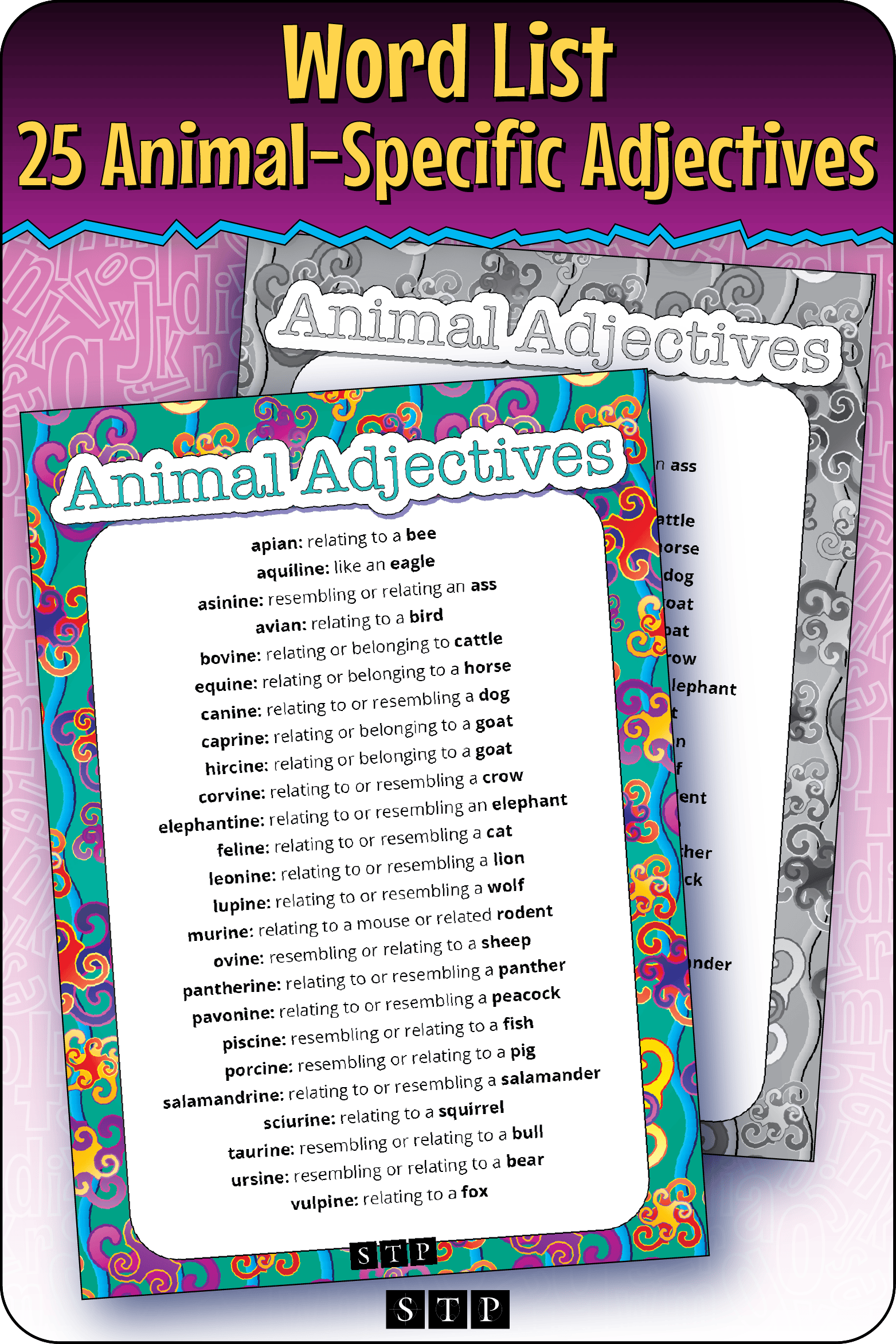
Designed to be used as a poster, a printed word mat, or a digital learning aid, this free PDF provides 50 expressive alternatives to basic age descriptions like 'young' and 'old', ranging from the inexperienced (callow, green) to the visibly declining (decrepit, doddering) and the highly energetic (sprightly, vigorous).
CONTENTS AT A GLANCE
- 50 unique adjectives to use instead of basic words like 'young' and 'old'
- Words ordered alphabetically for easy reference
- A broad spectrum of vocabulary covering all stages of life to help children and students build vivid profiles of people
- Full-colour and greyscale printing available
SUITABLE FOR
- Narrative writing, particularly for vivid character descriptions
- Vocabulary development for reading comprehension
- Use in the classroom or at home
- Parents and teachers who want a concise, self-contained at-a-glance reference tool
SUGGESTED AGE GROUPS
- Ages: 11-12, 12-13
- Years: Year 7 and Year 8
- Key Stages: KS3
LEARN MORE
To learn more about this resource's learning objectives and outcomes, seasonality & age range, please see this resource's FAQs.
To learn more about the specific features of this resource and suggestions about how to use it, please see our handy 50 Age Adjectives FAQs.
50 AGE ADJECTIVES - LEARNING OBJECTIVES, SEASONALITY, & AGE RANGE FAQs
WHAT ARE THE LEARNING OBJECTIVES & OUTCOMES OF THIS RESOURCE?
This resource is designed to help students move beyond basic age descriptors and develop the kind of precise, connotation-aware vocabulary that marks out stronger writing at KS3 and beyond.
Most immediately, students learn that 'old' and 'young' are the tip of a much larger iceberg. On a deeper level, students learn that many of these words do not simply describe age, they also carry a judgement or emotional charge. For example
To say a person is 'childlike' suggests innocence or simplicity, while 'childish' implies immaturity or regression
To describe a person as 'youthful' is a compliment, whereas 'juvenile' often isn't
To refer to a person as 'senior' is respectful, however 'geriatric' can be clinical or dismissive
These shades of meaning matter. Compare the following two sentences:
- Her grandfather, who was old, sat alone on the bench.
- Her grandfather, who was decrepit, sat alone on the bench.
In the first sentence, the word 'old' tells us that her grandfather has lived a long time, but there is no suggestion of the illness, weakness or frailty that the word 'decrepit' conveys in the second sentence.
IS THIS AN EVERGREEN OR SEASONAL RESOURCE?
Yes. This resource can be used at any point in the school year. It is particularly useful at the start of a descriptive or narrative writing unit, when students are building their vocabulary toolkits for character description. The resource may also be useful during revision sessions as a quick refresher.
CAN YOU PROVIDE FURTHER GUIDANCE REGARDING AGE RANGE & SUITABILITY?
The years and ages listed above are intended as recommendations only; please feel free to use this resource in any educational context that suits your needs.
50 AGE ADJECTIVES - USING THIS RESOURCE FAQs
I AM A PARENT: DO YOU HAVE ANY OTHER USAGE SUGGESTIONS FOR ME?
As well as being a useful reference resource, the list also works well as a starting point of various extension activities.
You might want to go through the list with your child and place the each of the adjectives into an appropriate word bucket: ‘child’, ‘young adult’, ‘adult’ and ‘older adults’.
You may also wish to go through the list and divide the adjectives into three types: positive connotations, neutral, negative connotations.
For a third activity, you might focus on the beginnings and endings of the adjectives and identify the different prefixes, suffixes or both that are used by the words in the list, e.g. ‘im-‘, ‘in-‘, ‘-ish’, and ‘-ous’.
DOES THIS RESOURCE SUPPORT GCSE PREPARATION? AND IF SO, HOW?
In Years 7, 8, and 9, students are laying the foundations for their GCSEs, whether this is just the mandatory English Language or the English Literature papers as well. In either case, a wide, sophisticated vocabulary is central.
This resource helps students towards a stronger vocabulary in two ways.
On the one hand, the list gives students a wider range of adjectives to draw on when writing, specifically when they are describing their characters.
Writing 'the sprightly pensioner' demonstrate a far more sophisticated vocabulary than simply writing 'the lively old woman'.
On the other hand, some of these words such as 'puerile', 'juvenescent', 'senile', 'uninitiated’ can be an obstacle to comprehension. Obviously, knowing the meanings of such words removes the obstacle. However, even if students can’t remember the exact definitions, having seen the words before increases students’ chances of being able to infer the meanings from the context.
HOW DO I USE THIS RESOURCE AS A PRINTED RESOURCE?
Print it as a word mat to keep on the desk during writing sessions or display it as a classroom poster for easy reference. It works particularly well alongside a character description task. Students can scan the list to find a word that fits the character they are building, then check its connotations before finalising their choice.
For home use, it slips easily into a folder or ring binder alongside other vocabulary reference sheets.
HOW DO I USE THIS RESOURCE AS A DIGITAL LEARNING AID?
There are several ways to use this PDF on a screen.
Keep the PDF open on screen alongside a writing document and switch between them as needed.
In a PDF reader, students can highlight words they have used or want to remember.
For classroom use, the resource projects clearly onto an interactive whiteboard and its alphabetical layout makes it easy to navigate at a glance.
Note: Given the vibrant nature of the full colour version of this resource, it works particularly well in its digital format.