Home > Free Resources > Worksheets & Activities > Space Travel Vocabulary Set 2 (Y5 & Y6)
KS2 Space Vocabulary Worksheets Set 2 with Answers – Free Printable PDF for Years 5–6
- RRP:
- FREE
- Format:
- Printable PDF
- Pages:
- 9
- UK English
No email required.
Overview
Help grow your child's knowledge of space-related words with these free printable vocabulary fill-in-the-blanks exercises.
ABOUT THIS FREE RESOURCE
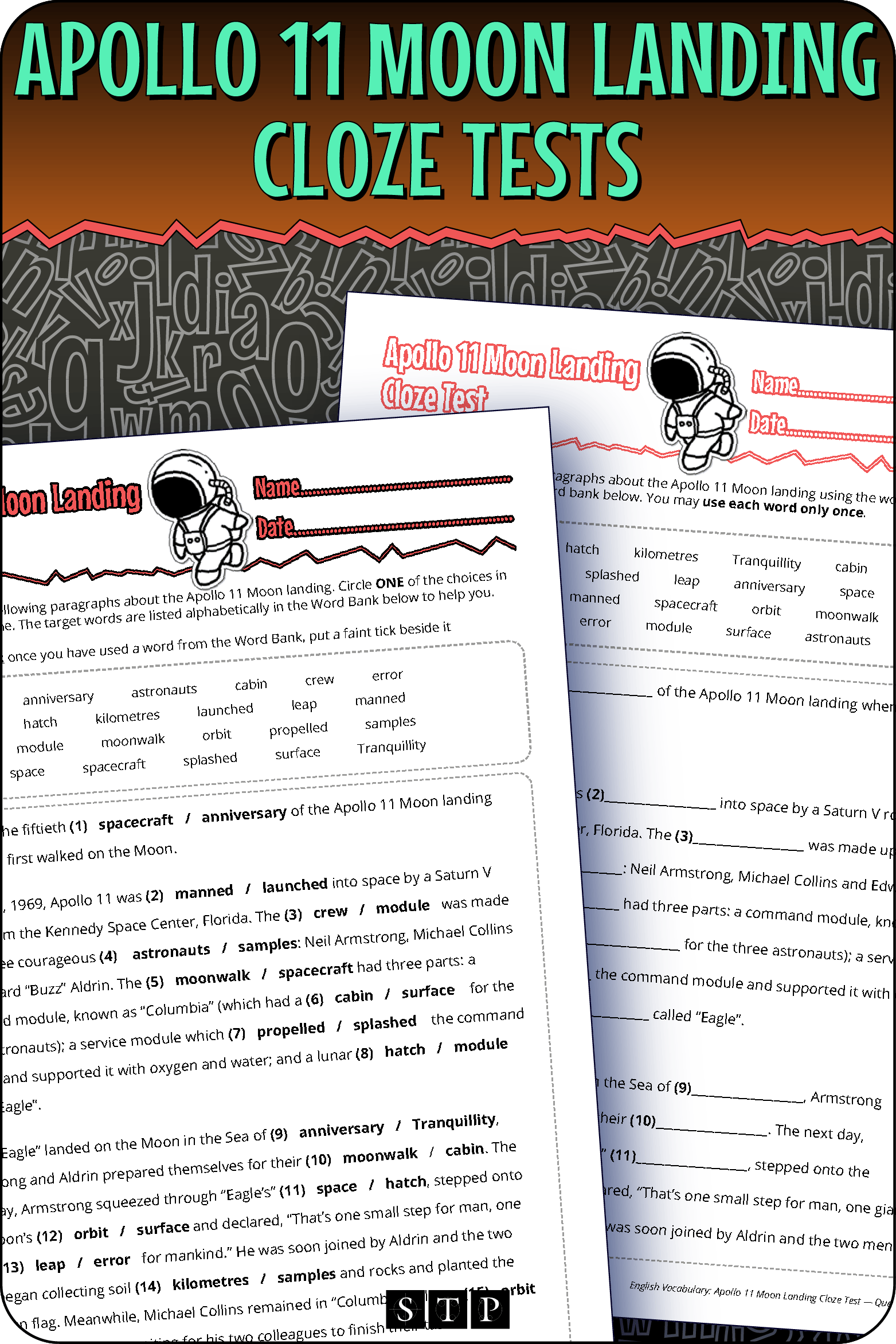
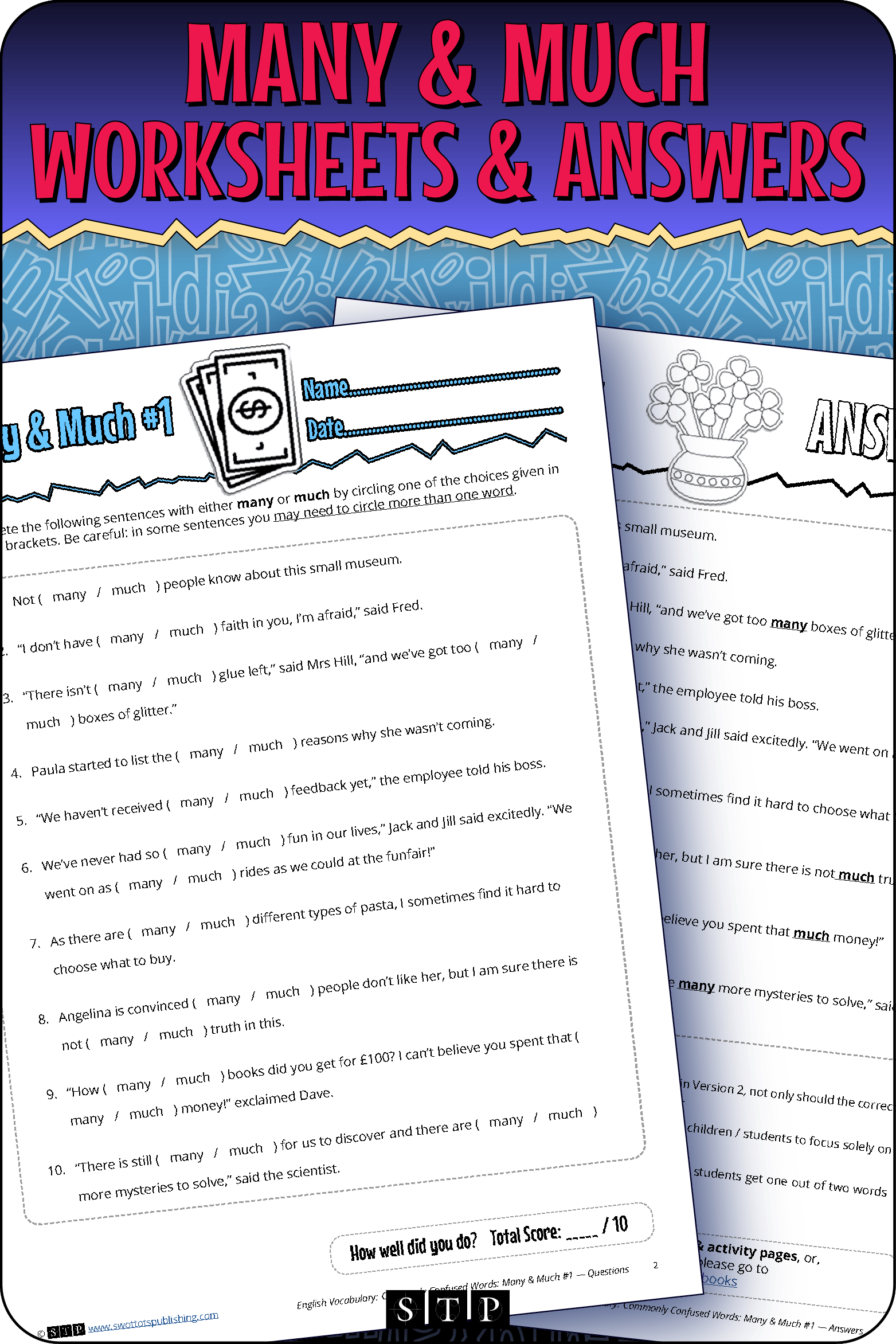
This printable PDF allows children to practise a specific selection of words related to space exploration. Children must choose which of the ten given words completes each sentence.
The resource includes two differentiated versions: Version 1 gives students two words in brackets each time to support identification; for a greater challenge, Version 2 contains blanks for students to complete unaided.
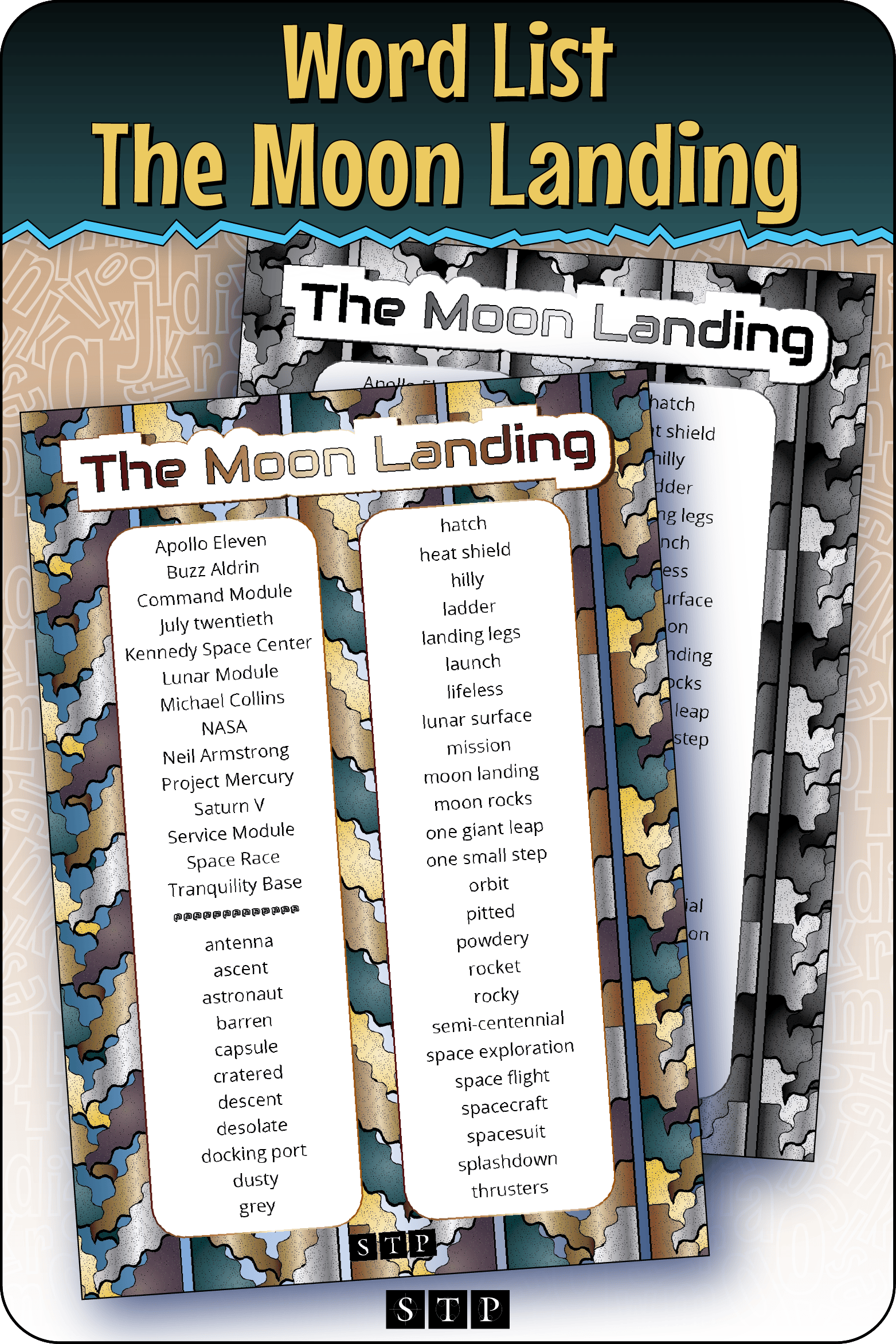
The resource contains full answers and a glossary of the target words.
Quick Notes for Parents & Teachers outline the learning objectives, explain the two versions, and map the sections of the resource.
The resource includes two printing options for the exercises: colour or ink-friendly greyscale.
CONTENTS AT A GLANCE
- 10 fill-in-the-blank sentences to complete using vocabulary in a word bank
- Two versions: with hints (provides a choice of two words in brackets each time) and no hints (provides blank space only)
- Glossary of target words
- Full answers
- Quick Notes for Parents & Teachers
- Colour-accented and ink-friendly greyscale printing options available
- Links to further free resources
- A4 printable PDF
SUITABLE FOR
- Vocabulary reinforcement & acquisition
- Classwork, homework, tutoring, or home learning
- Quick, themed sessions to support & extend vocabulary knowledge
- Parents and teachers who want targeted, topic-specific practice materials
SUGGESTED AGE GROUPS
- Ages: 9-10, 10-11
- Years: Year 5 & Year 6
- Key Stages: Upper KS2
LEARN MORE
To learn more about this resource's differentiation, learning objectives & outcomes, seasonality & age range, please see this resource's FAQs.
To learn more about space travel and other related topics, please see our handy World Space Week and Other Space Travel Topics FAQs.
DIFFERENTIATION, LEARNING OBJECTIVES, SEASONALITY, & AGE RANGE FAQs
DIFFERENTIATION
What is a Differentiated Resource?
A differentiated resource is one that provides the same exercise in two distinct versions. Each version has its own format and separate instructions.
Why Differentiate?
The material is differentiated to accommodate children and students with a range of abilities and strengths. The differentiation also means that the exercise can be used more than once - with Version 2 providing an extra (or subsequent) challenge.
How is this Resource Differentiated?
Version 1 provides children and students with guided practice. They are given two words in a pair of brackets each time, enabling children and students to see the correct word in the context of the sentence.
Version 2 gives children and students the opportunity to practise independently. The sentences contain blanks for the children and students to complete with their chosen word.
LEARNING OBJECTIVES & OUTCOMES
These exercises help establish how well children and students know the meanings of a predefined set of words related to space travel.
Focusing on this predetermined set of words helps reinforce the meanings that the children and students already know while also potentially helping to extend their vocabulary.
SEASONALITY
You can employ this resource at any point during the year. That said, you may find it particularly useful in the run-up to World Space Week in October, or if your children or students are looking at materials that are connected to space or astronomy.
AGE RANGE & SUITABILITY
Kindly note that the years and ages listed above are intended as recommendations only. Feel free to use this resource in any educational context that is appropriate to your needs.
WORLD SPACE WEEK & OTHER SPACE TRAVEL TOPICS - FAQs
What is World Space Week and Why is it Celebrated?
World Space Week is an international celebration of how space science and technology improve our lives. You could think of it as a giant global birthday party for space exploration.
World Space Week is celebrated for several reasons:
- To inspire students
- To show public support for space programmes
- To educate the public about space activities
- To encourage cooperation among nations in space exploration
Dedicating a week every year to space helps to highlight how space science impacts our daily lives, from weather forecasts and GPS to communication and environmental monitoring.
*****
When is World Space Week?
World Space Week takes place every year from 4 to 10 October.
These dates were chosen specifically to mark two significant milestones in space exploration:
- October 4, 1957: The launch of Sputnik 1, the first artificial Earth satellite, which marked the beginning of the Space Age.
- October 10, 1967: The signing of the Treaty on Principles Governing the Activities of States in the Exploration and Use of Outer Space, including the Moon and Other Celestial Bodies.
What was the Theme of The Most Recent Year's World Space Week (2025)?
The theme for World Space Week 2025 was Living in Space, focusing on how space science and technology help us live and work beyond Earth.
Previous Themes of World Space Weeks:
2024: Space & Climate Change (focusing on the climate)
2023: Space & Entrepreneurship (celebrating the growing commercial space industry)
2022: Space & Sustainability (focusing on the long-term responsible use of space)
2020: Satellites Improve Life (highlighting the benefits of satellites)
2019: The Moon: Gateway to the Stars (marking 50 years since the Apollo 11 moon landing)
*****
Common Space Topics in KS2 in the UK
Between Years 3 and 6, children learn about space in science lessons, often under topics like Earth and Space. Key areas commonly include
- The Earth's rotation: understanding day and night
- The Earth's orbit around the Sun: understanding years and seasons
- The Moon's orbit around the Earth: understanding the phases of the Moon
- The Solar System: naming and ordering the planets
- Other celestial bodies: learning about stars, asteroids, comets
- Gravity: its role in keeping planets in orbit
By Years 6 and 7, this understanding deepens, preparing them for more complex physics and astronomy concepts in secondary school.
*****
Commonly Asked Questions About Space
Children's curiosity about space often leads to questions that you might not have the answers to off the top of your head. To help you, we’ve put together a few common ones that your child might ask you:
How do we travel to space?
We travel to space using extremely powerful rockets. These rockets burn fuel rapidly to generate enormous forward-moving force (or thrust), pushing a spacecraft fast enough to escape Earth's gravity. Once in space, smaller rockets (thrusters) are used to move around.
How long does it take to travel to space?
Surprisingly, reaching orbit – which counts as “space” – doesn’t take long at all. For example, a journey to the International Space Station usually takes about 8-9 minutes from launch to reaching orbit, though docking with the station can take several hours or even days. Trips to the Moon or other planets take much longer, though.
How fast does the International Space Station (ISS) travel?
The International Space Station (ISS) travels incredibly quickly. It travels at about 28,000 kilometres per hour (17,500 miles per hour). At that speed, it circles Earth every 90 minutes, so the astronauts on board see a sunrise or sunset every 45 minutes.
Why does the International Space Station (ISS) travel so fast?
The very, very short answer is that the ISS flies so fast to keep from falling out of the sky.
One way of thinking about it is that it’s like trying to keep a ball on a string swinging around your head. If you don't swing it fast enough, it will fall.
The slightly longer answer is that to stay up in space, the ISS must keep a constant balance between two powerful forces: gravity and speed. Here’s a quick breakdown of how this works:
- Gravity wants to pull it down. The Earth is always trying to pull the ISS back to the ground, just like it pulls you and everything else down.
- Speed keeps it up. The ISS flies extremely fast. This speed creates a powerful push outwards, away from Earth. This outward push perfectly balances the inward pull of gravity.
- So, the ISS is always falling — but never landing. Because these two forces (gravity and speed) are perfectly balanced, the ISS is always "falling" around the Earth, but its forward speed is so great that it keeps missing the ground. This is what keeps it in orbit.
Can sound waves travel through space? Why not?
No, sound cannot travel through space. Sound waves need a medium (like air, water, or solid material) to vibrate through to reach our ears. Space is mostly a vacuum – it's empty, or nearly empty, of matter. Since there's almost nothing for sound waves to vibrate through, they can't travel. It’s like trying to swim without any water – there’s nothing there to move through.
Can light travel through space? How?
Yes, light can travel through space. Unlike sound, light does not need a medium to travel. Light is a form of energy (electromagnetic radiation) that travels through the vacuum of space as waves. This is why we can see distant stars and galaxies, and why sunlight reaches Earth.
How do radio waves travel through space?
Like light, radio waves are a form of energy (electromagnetic radiation) that do not need a medium to travel. They can pass directly through the vacuum of space at the speed of light, which is how we communicate with spacecraft and receive signals from distant objects in the universe.
Who was the first man to travel into space?
The first man in space was Soviet cosmonaut Yuri Gagarin, who orbited Earth once on 12 April 1961 aboard Vostok 1.
Who was the first woman to travel into space?
The first woman in space was Soviet cosmonaut Valentina Tereshkova. She launched on 16 June 1963 aboard Vostok 6, spending almost three days in space and completing 48 circuits of Earth.
Who was the first man to travel into space twice?
The first person to travel into space twice was Virgil “Gus” Grissom from the United States. He flew on Mercury-Redstone 4 in 1961 and Gemini 3 in 1965.
How fast does our technology enable us to travel in space?
With current technology, the fastest human-made object is NASA’s Parker Solar Probe, which has reached about 430,000 miles per hour (≈700,000 kilometres per hour) during close passes of the Sun.
However, for human travel, rockets typically send us into orbit at about 28,000 kilometres per hour, and missions to the Moon reach speeds around 40,000 kilometres per hour as they leave Earth's gravity. To reach other stars, we would need technology far beyond what we have today.
Why is space travel important?
Space travel is important for many reasons. It helps us:
- Understand our universe: learning about planets, stars, and galaxies helps us understand where we come from
- Improve life on Earth: technologies developed for space (like satellite communication, GPS, advanced materials, and even memory foam) benefit us daily
- Monitor our planet: satellites help us track climate change, weather, and natural disasters
- Prepare for the future: exploring possibilities for future human habitation beyond Earth
- Inspire future generations: space exploration encourages children to study science, technology, engineering, and maths
* * * * *
RELATED WORKSHEETS & QUICK GUIDES
Space Travel Vocabulary Worksheets Set 1
The Apollo 11 Moon Landing Worksheets & Quick Guide for Parents