Home > Free Resources > Study Resources Library > 50 Snake Words (Y5 & Y6)
50 Snake Words - Free Printable PDF List for Years 5 and 6
- RRP:
- FREE
- Format:
- Printable PDF
- Pages:
- 4
- UK English
No email required.
Overview
'Scaly', 'serpentine', 'sinuous', and 'stealthy' are just four of fifty snake-y words on this list. How many does your child know?
ABOUT THIS FREE RESOURCE
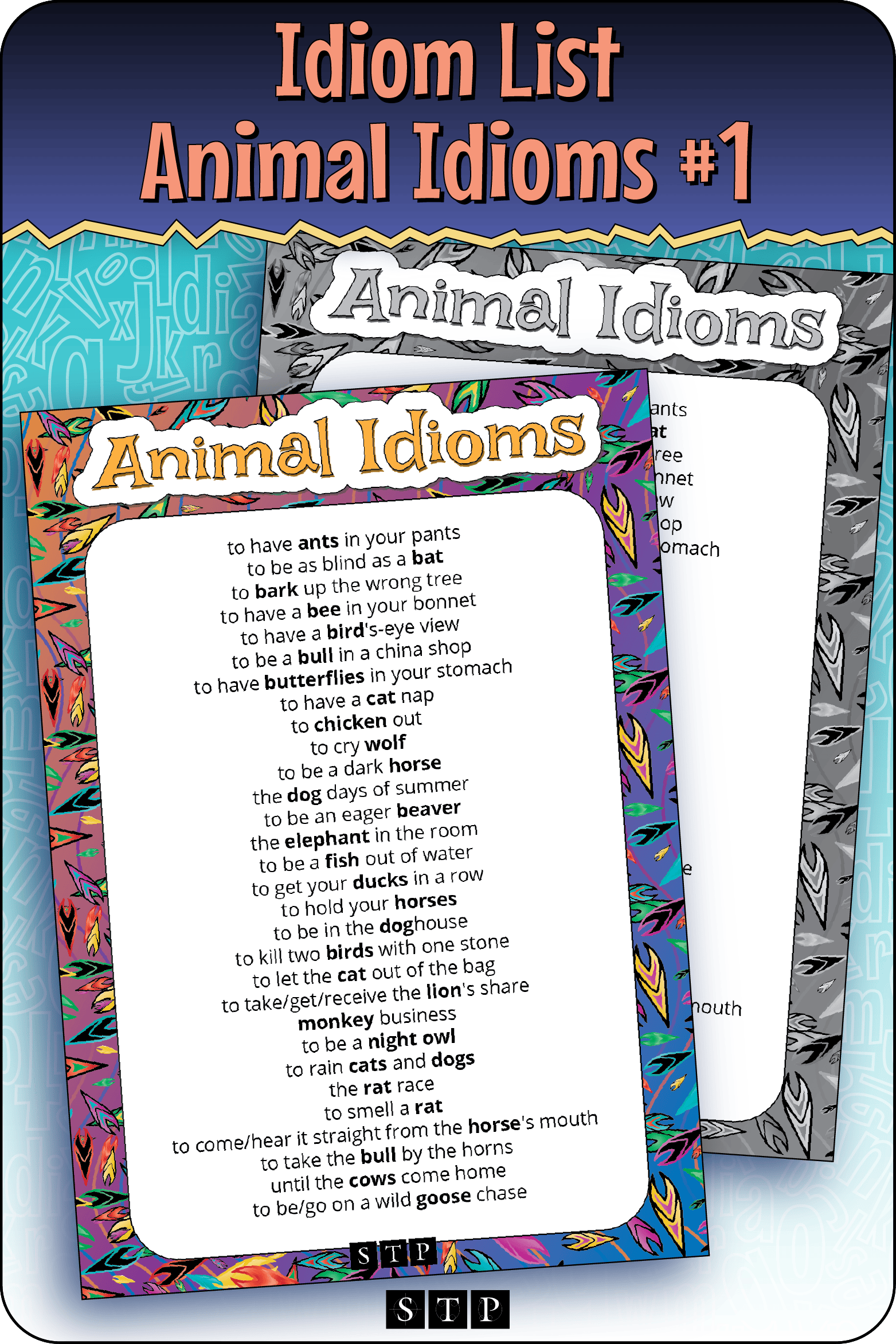
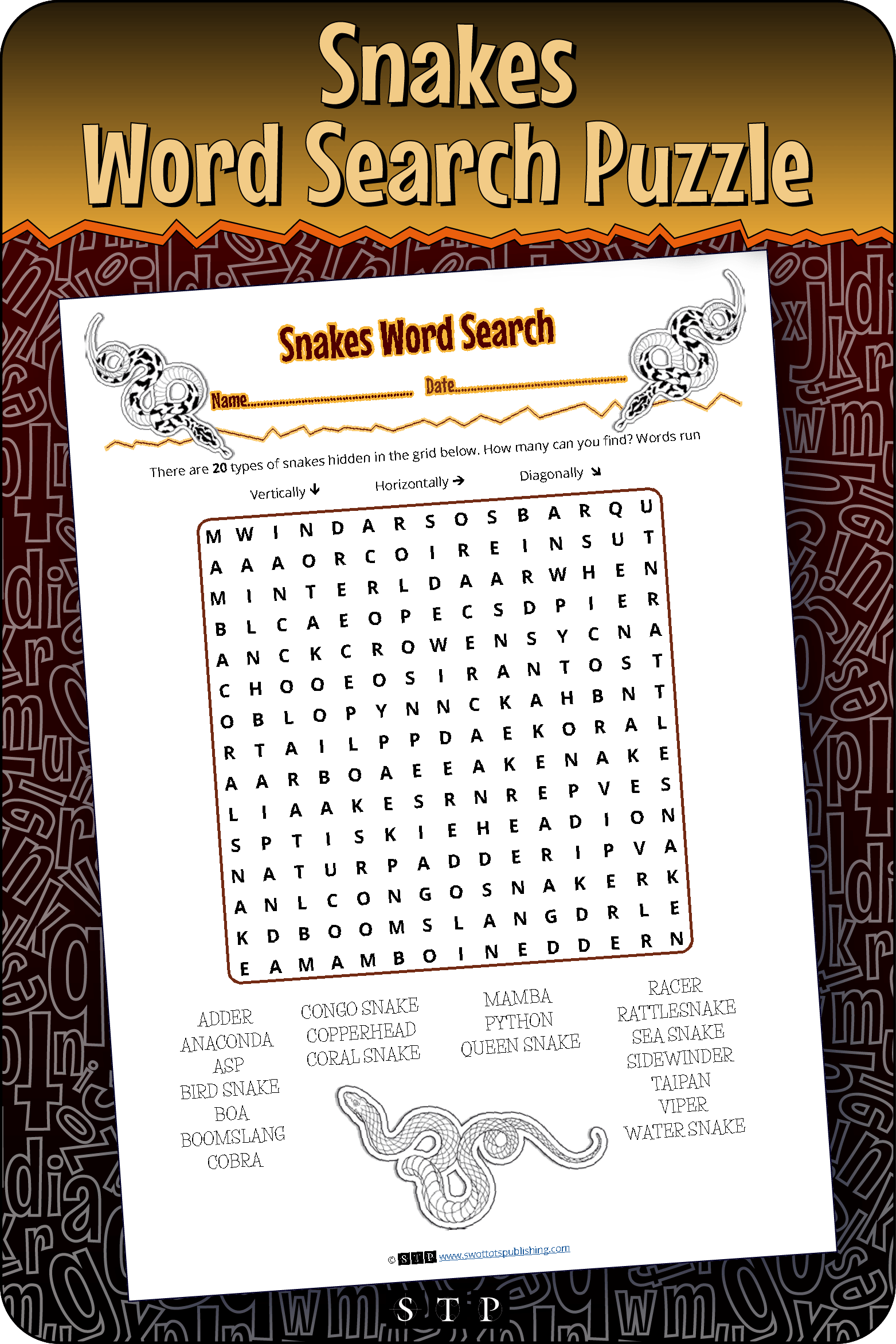
Designed to be used as a digital resource or as a printed word mat or poster, this free Years 5 and 6 vocabulary PDF lists nineteen snake species, from the UK's adder to the Australian taipan, along with thirty-one words for the way they look, move, and spark the imagination.
CONTENTS AT A GLANCE
- 50 distinct snake words, combining names of specific species with closely-associated adjectives, verbs, and nouns
- Snake species and snake-related words split into two visibly distinct groups
- Word groups listed alphabetically for easy reference
- Full-colour and greyscale printing available
SUITABLE FOR
- Non-fiction writing, especially on snakes
- Cross-curricular topic work across Science, Geography, and English
- Multiple bite-size sessions or a single, focused lesson
- Home or classroom use, in printed or digital form
- Parents and teachers who want a concise, self-contained snake-themed vocabulary resource
SUGGESTED AGE GROUPS
- Ages: 9-10, 10-11
- Years: Year 5 and Year 6
- Key Stages: Upper KS2
LEARN MORE
To learn more about this resource's learning objectives and outcomes, seasonality & age range, please see this resource's FAQs.
To learn more about the specific features of this resource and suggestions about how to use it, please see our handy 50 Snake Words FAQs.
50 SNAKE WORDS - LEARNING OBJECTIVES, SEASONALITY, & AGE RANGE FAQs
LEARNING OBJECTIVES
This list of words aims to develop your child's knowledge of the names of common types of snakes along with a range of appropriate vocabulary that your child is likely to encounter in connection with snakes.
As they work through this list, your child will meet words that reinforce concepts that they have already (or will likely) encounter in the context of 'Living Things and the Habitats' or 'Animal Classification'. Specifically, vocabulary in this resource relates to
- Characteristics of reptiles: 'cold-blooded', 'scaly', 'limbless', 'reptilian'
- Predatory behaviour: 'carnivorous', 'bite', 'constrict', 'strike', 'venomous', 'poisonous'
- Lifecycle and movement: 'moult', 'shed', 'coil', 'glide', 'slither'
- Habitats via species:
- desert: 'sidewinder', 'rattlesnake'
- tropical forest: 'taipan', 'boomslang'
- aquatic: 'sea snake', 'water snake', 'anaconda'
- grassland / heath: 'adder', 'viper'
Equally, your child will encounter words in this list that highlight some of the most common cultural associations that snakes have
- Negative: 'calculating', 'cunning', 'deceptive', 'deadly', 'stealthy'
- Neutral: 'ancient', 'elusive', 'hypnotic'
- Positive: 'mysterious', 'wise'
Beyond expanding their general knowledge, both subgroups feed directly into your child's abilities to express themselves more precisely in their writing and speech.
SEASONALITY
This resource is evergreen, so you can use it any time of the year when your child is studying snakes or working on a topic that involves snakes in some way.
Nevertheless, you may find this resource particularly relevant for World Snake Day on 16 July (which is an annual event); and when discussing Chinese New Year (since one of the animals in Chinese zodiac is the Snake).
AGE RANGE
The years and ages listed above are intended as recommendations only; please feel free to use this resource in any educational context that suits your needs.
50 SNAKE WORDS - USING THIS RESOURCE FAQs
AREN'T SNAKES 'VENOMOUS' RATHER THAN 'POISONOUS'?
Yes, they are. 'Venomous' creatures deliver their toxins by actively biting or stinging another creature. 'Poisonous' creatures, on the other hand, transmit their toxin passively, when they are eaten or touched.
Because of this, almost all snakes that carry toxins are venomous.
One notable exception is the garter snake which is technically poisonous, because it stores the toxins from the newts and salamanders it eats. (For more on the distinction, see Britannica's What's the Difference Between Venomous and Poisonous? [⚠ NEW TAB].)
It is important to note though, that while there is a clear difference between 'venomous' and 'poisonous', the two adjectives are used interchangeably in everyday speech. So, 'a poisonous snake' is a phrase your child will very likely meet in stories, in conversation, and in nature programmes.
We have, therefore, included both words in the list. However, it is useful for you and your child to know that there is a difference, and where the difference lies.
I AM A PARENT: DO YOU HAVE ANY OTHER USAGE SUGGESTIONS FOR ME?
Absolutely. The list is a solid starting point for a range of extension activities. Here are a few suggestions:
- Trace the Latin and Greek Roots. Several adjectives in the list have recognisable roots: carn- in 'carnivorous' (Latin for 'flesh'); rept- in 'reptilian' (Latin for 'creeping'); serpent- in 'serpentine' (Latin for 'snake'); and hypno- in 'hypnotic' (Greek for 'sleep'). Select one word. Can your child spot the root? Do they know what it means? If not, can they guess? Can they think of other words that use it? Focusing on one root is a very efficient way accessing the meanings of multiple words.
- Pick Out the Verbs and Nouns. Ask your child to go through the second half of the list and create two groups: one for verbs and the other for nouns. How many of each word class can they find in the second group? Are there any words that can be used in both lists? Focusing on words that can be used as both verbs and nouns helps foreground the differences between the two word classes.
- Make Snake Fact Cards. Ask your child to select several snakes from the list. Print images of them and mount them on cardboard, leaving space for text. Then have your child research three to five surprising or interesting facts about each snake. When adding their facts to their cards, your child should use as many words from the list as possible.
- Map the World's Snakes. Print a world map for your child. Use the wildlife sites in the Further Reading section below to research where each of the nineteen snake species in the list is found. As you go, write each snake's name on the part of the map where it lives. For example, 'taipan' across Australia, 'cobra' across south Asia, 'rattlesnake' across the Americas, and so on.
ARE THESE WORDS SUITABLE FOR YEAR 6 SATs ENGLISH PREPARATION?
Yes. One question type that regularly features in the Year 6 SATs Grammar, Punctuation and Spelling test is matching adjectives to their correct suffix ending. This resource includes quite a few examples of such adjective suffixes, including
- '-ous' in 'venomous'
- '-y' in 'scaly'
- '-ian' in 'reptilian'
- '-ic' in 'hypnotic'
The list also reinforces several spelling patterns and rules that Year 6 children are tested on in the Paper 2 Spelling Test, including
- removing the final 'e' before adding a suffix in 'calculating' and 'carnivorous'
- the different 'y' sounds in 'python' and 'mysterious'
- 'c' making an 's' sound in 'racer' 'deceptive'
- the 'ie' letter string in 'ancient'
ARE THESE WORDS USEFUL FOR 11+ PREPARATION?
Yes. The 11+ draws heavily on word knowledge, and a themed list like this one is useful for both the verbal reasoning and English elements of the exam.
One verbal-reasoning question that relies on candidates having a wide word knowledge is the odd-one-out question, which gives the candidate a set of words and asks for the one that does not belong. Such questions often include one or two more obscure words to make the question challenging. For example,
Q. Select the odd one out: taipan, cobra, mamba, python, tarantula
A. Tarantula is the odd one out, as it is the only one that is not a snake.
Another common type of verbal reasoning question is multiple-meaning questions. These rely on the candidate's knowledge of homonyms (words that look and sound the same, but which have different meaning). For example, the question below requires the candidate to find a single word that fits both pairs of words in brackets.
Q. (drop, cast off) ___ (building, shack)
A. shed
This list also supports the English elements of the exam. Some of the more sophisticated words on the list — 'sinuous', 'serpentine', 'hypnotic', 'calculating', 'deceptive', 'elusive', and 'stealthy' — are the kind used in comprehension passages.
HOW DO I USE THIS RESOURCE IN ITS PRINTED FORMAT?
- Word Mat. Keep a copy on the desk for your child to refer to while they are writing about snakes or reviewing a piece of work.
- Page in a Personalised Lexicon. Add it to your child's personalised lexicon (if you have one) as a thematic word page to return to and build on.
- Poster. The full-colour design makes an eye-catching addition to a wall display, and can serve as an easy reference whether it goes up at home or in the classroom.
HOW DO I USE THIS RESOURCE IN ITS DIGITAL FORMAT?
- Digital Word Bank. Keep the PDF open on a tablet or laptop beside your child as they write, so the words are there to draw on without leaving their work.
- Digital Vocabulary Check-List. Work through the list on screen, highlighting the words your child already knows or the ones still to learn.
- Classroom Projection Resource. If you are a teacher, why not project the full-colour version onto the whiteboard for whole-class vocabulary work? No printing required.