Home > Free Resources > Study Resources Library > Sublime Summer Words (Y7 & Y8)
40 Sublime Summer-Words - Free Printable PDF List for Years 7 and 8
- RRP:
- FREE
- Format:
- Printable PDF
- Pages:
- 4
- UK English
No email required.
Overview
Encourage your tween to ‘ plunge’ head-first into fresh ways of expressing themselves with this list of 40 dazzling words for summer .
ABOUT THIS FREE RESOURCE
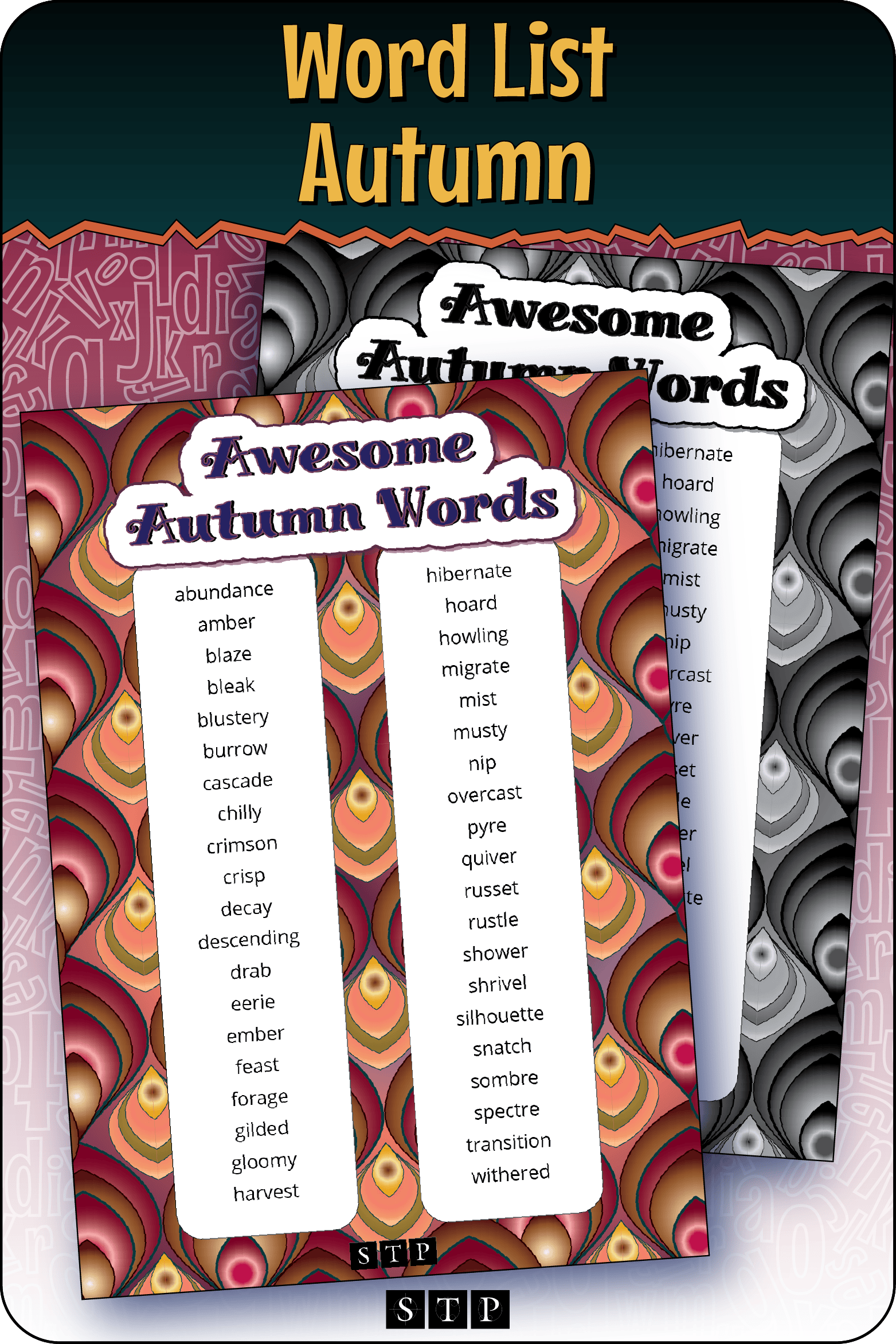
Designed to be used as a digital learning aid or as a poster or a printed word mat, this free PDF provides a wealth of 40 summer-themed words to heighten students’ word selection when describing aspects of summer like the heat, the beach, and sunlight.
CONTENTS AT A GLANCE
- A selection of 40 striking summer words
- A mix of nouns, verbs, and adjectives
- Words ordered alphabetically for easy reference
- Full-colour and greyscale printing available
SUITABLE FOR
- Narrative writing, particularly for vivid descriptive work
- Vocabulary expansion for reading comprehension
- Use in the classroom or at home
- Parents and teachers who want a targeted, curated vocabulary aid
SUGGESTED AGE GROUPS
- Ages: 11-12, 12-13
- Years: Year 7 and Year 8
- Key Stages: KS3
LEARN MORE
To learn more about this resource's learning objectives and outcomes, seasonality & age range, please see this resource's FAQs.
To learn more about the specific features of this resource and suggestions about how to use it, please see our handy 40 Sublime Summer-Words FAQs.
40 SUBLIME SUMMER-THEMED WORDS - LEARNING OBJECTIVES, SEASONALITY, & AGE RANGE FAQs
WHAT ARE THE LEARNING OBJECTIVES & OUTCOMES OF THIS RESOURCE?
This resource is designed to help students move beyond basic descriptions and develop the kind of precise, connotation-aware vocabulary that is key for stronger writing in KS3 and KS4.
One focal point of this list, therefore, is language that is literary. Words such as ‘azure’, ‘frolic’, ‘languid’, raucous’ and ‘throng’ are precisely the kinds of words that students are more likely to encounter in the novels, plays and poems they study.
Another aim of this list is to present students with a list of words from which they can make their own, shorter, quick lists.
For example, one possible subgroup could revolve around motion: ‘amble’, ‘bathe’, ‘frolic’, and ‘plunge’.
An alternative grouping might be of words relating to the heat and its effects: ‘blistering’, ‘brittle’, ‘parched’, ‘stifling’ and ‘sweltering’.
And so on.
By becoming more sensitive to a wide range of shades of meaning, students’ ability to produce more insightful analysis of literary texts will become stronger. At the same time, their writing skills will also improve – whether they are producing non-fiction texts or creative, narrative pieces.
IS THIS AN EVERGREEN OR SEASONAL RESOURCE?
This resource is designed with summer in mind, and as such will be useful in relation to a range of seasonal reading and writing tasks.
That said, you may also find this resource useful at other times of the year if your child or student is writing a story set during the summer holidays or is reading a novel or poetry that contains environments that are hot, like deserts.
CAN YOU PROVIDE FURTHER GUIDANCE REGARDING AGE RANGE & SUITABILITY?
The years and ages listed above are intended as recommendations only; please feel free to use this resource in any educational context that suits your needs.
40 SUBLIME SUMMER-THEMED WORDS - USING THIS RESOURCE FAQs
I AM A PARENT: DO YOU HAVE ANY OTHER USAGE SUGGESTIONS FOR ME?
As well as being a useful reference resource, the list also works well as a starting point for various extension activities.
You and your child may want to select a word from the list and see how many alternative contexts you can think of to use the word in. You may want to keep track of these associations by drawing a word map (i.e. a diagram like a mind map that shows connections between words and associations).
You may also wish to go through the list and divide the words into three types: positive connotations, neutral, negative connotations.
For a third activity, you might focus on organising the words into word class buckets. For example, you may wish to highlight adjectives (e.g. ‘azure’, ‘blistering’, ‘brittle’, ‘drowsy’, ‘parched’, etc.)
Please also see below (HOW DO I USE THIS RESOURCE IN ITS PRINTED FORMAT?) for further suggestions as to how to use this resource in conjunction with writing tasks.
DOES THIS RESOURCE SUPPORT GCSE PREPARATION? AND IF SO, HOW?
In Years 7, 8, and 9, students are laying the foundations for their GCSEs, whether this is just for the mandatory English Language or for the English Literature papers as well. In either case, having a robust vocabulary is central.
This resource helps students towards a wide-ranging vocabulary in two ways.
On the one hand, the list gives students a generous selection of words to draw on when writing, especially if they are describing the heat and its effects or the contrast between lazy days and days of intense activity.
Writing 'she gulped the ice-cold water' demonstrates a far more sophisticated vocabulary than simply writing 'she drank the ice-cold water quickly’.
On the other hand, some of these words such as ‘azure’, ‘frolic’, and ‘languid’ can impede comprehension.
Obviously, if the student knows the words, there is no difficulty.
However, if the student does not, then even if students can’t remember the exact definitions, a prior encounter with the words increases students’ chances of inferring the meanings from the context.
HOW DO I USE THIS RESOURCE IN ITS PRINTED FORMAT?
Once printed, you could use this resource as a word mat that you keep visible during your child's or student's creative writing sessions. Encourage them to go through the list at regular intervals to remind themselves of the words and to see if they can use any of them in their work.
Another way this may be useful is in the editing stage of their work. As your child or student is revising, encourage them to consult the list to see if they can use any of the words to strengthen their text.
You may also wish to add this sheet to a ring binder or folder of word mats (if you already have one).
Alternatively, you might want to hang it on the wall as part of a word wall or learning wall display in your classroom or at home.
HOW DO I USE THIS RESOURCE IN ITS DIGITAL FORMAT?
There are several ways to use this PDF on a screen.
If your child or student types their stories on a computer, laptop, or tablet, they can keep the PDF open on one half of the screen as a permanent, digital word bank they can glance at when they need inspiration.
Save the PDF to a tablet or an iPad. Using any basic PDF reader, your child or student can highlight words they want to include in their work or cross off words as they use them.
If you are a teacher and want to use this resource in your classroom, consider projecting this PDF onto an interactive whiteboard during a creative writing lesson to use for whole-class brainstorming or group work.
Note: Given the vibrant nature of the full-colour version of this resource, it works particularly well in its digital format.