Home > Free Resources > Study Resources Library > Autumn Synonyms Swap (Y5 & Y6)
40 Synonym Pairs for Autumn - Free Printable PDF Word List for Years 5 and 6
- RRP:
- FREE
- Format:
- Printable PDF
- Pages:
- 4
- UK English
No email required.
Overview
Help your child move beyond their go-to words for autumn with this set of 40 synonym swap pairs, from simple upgrades like ‘crimson’ instead of ‘red’ to more atmospheric replacements like ‘eerie’ for ‘scary’.
ABOUT THIS FREE RESOURCE
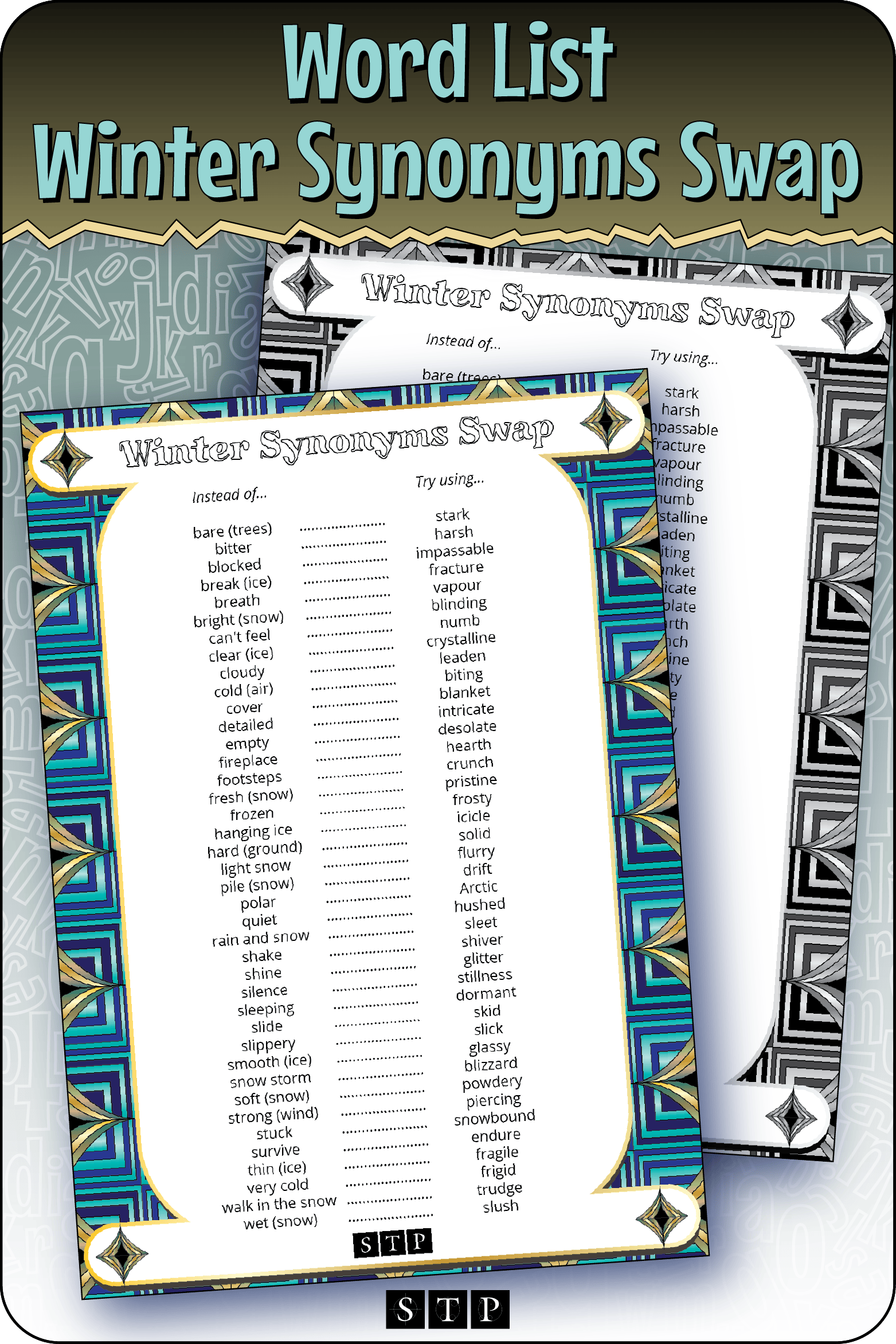
Designed to be used as a poster, a printed word mat, or a digital learning aid, this free PDF provides a swap-list of 40 pairs of autumn-themed synonyms to enrich students’ word choice to talk about the weather, colours, seasonal plant changes, and Halloween.
CONTENTS AT A GLANCE
- 40 autumn synonym pairs in a clear ‘Instead of …/Try Using…’ format
- Clarifying context included for words with multiple meanings
- Words and phrases listed alphabetically for easy reference
- Full-colour and greyscale printing available
SUITABLE FOR
- Vocabulary enrichment
- Descriptive and creative writing tasks with an autumnal or seasonal theme
- Use in the classroom or at home
- Parents and teachers who want a focused, ready-to-use vocabulary reference
SUGGESTED AGE GROUPS
- Ages: 9-10, 10-11
- Years: Year 5 and Year 6
- Key Stages: Upper KS2
LEARN MORE
To learn more about this resource's learning objectives and outcomes, seasonality & age range, please see this resource's FAQs.
To learn more about the specific features of this resource and suggestions about how to use it, please see our handy 40 Synonym Pairs for Autumn FAQs.
40 SYNONYM PAIRS FOR AUTUMN - LEARNING OBJECTIVES, SEASONALITY, & AGE RANGE FAQs
WHAT ARE THE LEARNING OBJECTIVES & OUTCOMES OF THIS RESOURCE?
The central purpose of this resource is to encourage children and students to try out new words (the ‘Try Using…’ list) in a familiar seasonal context.
By giving them a list of choices, this removes the pressure of having to find or to think of an alternative word or phrase. Instead, they can use the one listed and focus on how best to employ it. Take, for example, how the word ‘brown’ might be used in two distinct ways:
PAIR A
- There were brown leaves everywhere.
- There were drab leaves everywhere.
PAIR B
- There were brown leaves everywhere.
- There were russet leaves everywhere.
In PAIR A, the word ‘drab’ adds connotations of dullness and lack of colour. In contrast, in PAIR B, the word ‘russet’ adds a sense of rich, warm colour to the sentences.
In addition to building their vocabulary, this resource helps children and students develop their knowledge of more subtle differences in meanings and word connotations. This, in turn, leads to students writing more vividly and precisely. It also stretches their comprehension and textual analysis skills.
IS THIS AN EVERGREEN OR SEASONAL RESOURCE?
This resource is clearly designed with autumn and Halloween in mind, and as such will be useful in relation to a range of seasonal reading and writing tasks.
That said, you may also find this resource useful at other times of the year if your child or student is writing a scary story, or is reading a novel or poetry that includes an element of the supernatural.
CAN YOU PROVIDE FURTHER GUIDANCE REGARDING AGE RANGE & SUITABILITY?
The years and ages listed above are intended as recommendations only; please feel free to use this resource in any educational context that suits your needs.
40 SYNONYM PAIRS FOR AUTUMN - USING THIS RESOURCE FAQs
THERE SEEM TO BE TWO DISTINCT TYPES OF SYNONYMS IN THIS RESOURCE. IF SO, WHAT ARE THE TWO TYPES? AND HOW ARE THEY DIFFERENT?
Yes, this is correct. There are two types of swaps in this list: (a) intensity swaps and (b) connotation shifts.
(A) Intensity Swaps
With this type of swap, the word is being replaced by a synonym that is both more vivid and precise. For example,
- The dwarves were delighted with the big meal they were treated to.
- The dwarves were delighted with the feast they were treated to.
- Outside, the wind was loud.
- Outside, the wind was howling.
In each of the above pairs, the word in the second sentence provides the reader with a more detailed understanding. Food that one receives at a ‘feast’ is far greater in scope and luxury than the food one gets with a ‘big meal’. Similarly, a ‘howling’ wind conveys ferocity and volume, whereas ‘loud’ conveys only volume.
(B) Connotation Shifts
With this type of swap, the word is being replaced by another that is similar in meaning, but which carries different connotations. For example,
- The soldiers stood around the bonfire.
- The soldiers stood around the pyre.
In the first sentence, the soldiers are standing around a large fire that could have been kindled for a celebration or for getting rid of rubbish.
In the second sentence, the soldiers are standing around a large fire that is usually used to burn a corpse as part of a funeral ceremony.
Obviously, there are significant differences in tone and occasion (and therefore connotations) between the two words and their sentences.
Knowing not just what words mean, but what they do and how they can change sentences is key to improving writing and reading skills.
I AM A PARENT: DO YOU HAVE ANY OTHER USAGE SUGGESTIONS FOR ME?
This resource provides you with a pre-curated themed list of words and synonyms that you can go through with your child at your own pace, and in your own way. You may wish to go through the words in alphabetical order, or you may wish to select words that relate to other tasks you are engaged in.
Given its nature, this resource lends itself well to dictionary work and subsequent discussions about similarities and differences in meaning and usage.
As you and your child go through this list, you may wish to create two lists: one for upgrade swaps, and the other for connotation shifts.
This resource might also be useful if you are planning an autumn walk. In this instance, you might want to look at the list before you go out and see if you encounter anything that you could use words on the list to describe. Or, you might take the resource with you as a checklist. Alternatively, you may wish to leave the list at home and use it as a post-walk discussion or writing prompt.
ARE THESE WORDS SUITABLE FOR YEAR 6 SATs ENGLISH PREPARATION?
Yes. Questions involving synonyms (whether in passages, true or false, or matching questions) are routinely used in the Year 6 English Paper 2: Grammar, Punctuation & Spelling.
Focusing on synonyms and extending the synonyms in your child’s vocabulary toolbox, therefore, is worthwhile throughout Year 6.
ARE THESE WORDS SUITABLE FOR 11+ PREPARATION?
Yes. This set of words is a useful addition to 11+ preparation given its focus on words with different connotations since connotations are often the key to odd ones out questions.
More generally, the more advanced vocabulary is useful for both reading comprehension and writing tasks.
HOW DO I USE THIS RESOURCE AS A PRINTED RESOURCE?
Print the list and keep it on the desk as a word mat during writing sessions as a quick reference tool so that your child can pick an appropriate synonym when needed.
However, do make sure that your child is aware that not all swaps are interchangeable and that some words have connotations that may not be right for every context.
The list works equally well as a wall display in a classroom or home study space.
In addition, you may find it helpful to keep a copy of this list in a vocabulary folder (if you have one).
HOW DO I USE THIS RESOURCE AS A DIGITAL LEARNING AID?
There are several ways to use this PDF on a screen.
If your child or student works on a computer, laptop, or tablet, they can keep the PDF open on one half of the screen as a permanent, digital word bank they can glance at when they need inspiration.
Save the PDF to a tablet or an iPad. Using any basic PDF reader, your child or student can highlight synonyms they want to include in their work or cross the words off as they use them.
If you are a teacher and want to use this resource in your classroom, consider projecting this PDF onto an interactive whiteboard during a creative writing lesson to use for whole-class brainstorming or group work.
Note: Given the vibrant nature of the full-colour version of this resource, it works particularly well in its digital format.