Home > Free Resources > Quick Guides for Parents > The Subjunctive Vs. The Indicative (KS2 & KS3)
THE SUBJUNCTIVE MOOD VS. THE INDICATIVE MOOD: A QUICK GUIDE FOR PARENTS (KS2 & KS3)
To better understand the subjunctive, it is helpful to know what the 'normal' way we use verbs is called. This is the indicative mood.
* * * * *
WHAT IS THE INDICATIVE MOOD?
The indicative mood is the most common way we use verbs in English. It's the "statement of fact" mood. We use it to talk about things that are real, factual, certain, or that express opinions as if they are facts.
Examples:
- The sun is shining. (A fact)
- She plays football every Saturday. (A regular activity, a fact)
- They went to the park yesterday. (A past event, a fact)
* * * * *
HOW DOES THE SUBJUNCTIVE MOOD DIFFER FROM THE INDICATIVE MOOD?
The key difference lies in what the verb is trying to express:
The Indicative Mood is for facts, certainties, and actual events.
Examples
- He is here.
- He was here.
- He will be here.
- He wasn’t there.
- He isn’t there.
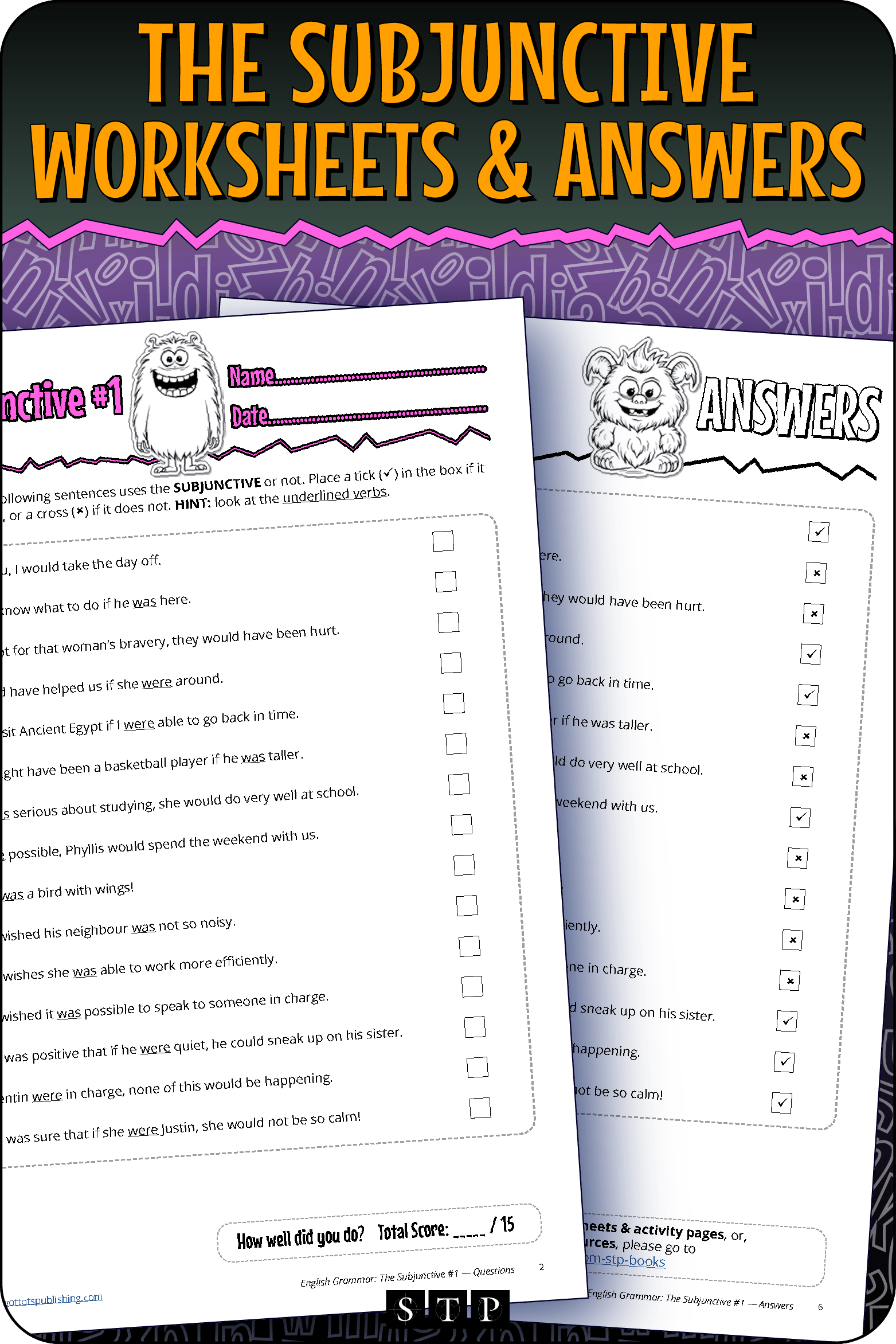
The Subjunctive Mood is for wishes, suggestions, demands, or things that are imagined, uncertain, or contrary to fact.
Examples
- I wish he were here. (A wish; he is not here, so it's contrary to fact.)
- If he were here, things would be better. (A hypothetical; he is not here, but there is an assumption that his presence would improve matters.)
- It is important that he be here. (A suggestion/demand, not a statement of his current presence.)
* * * * *
Another way of thinking about it
The Indicative Mood is like a photograph of reality – it shows things as they are or were.
The Subjunctive Mood is like a dream or a blueprint – it shows things as we wish them to be, imagine them, or demand they become.