Home > Free Resources > Study Resources Library > Summer Synonyms Swaps (Y5 & Y6)
40 Synonym Pairs for Summer - Free Printable PDF Word List for Years 5 and 6
- RRP:
- FREE
- Format:
- Printable PDF
- Pages:
- 4
- UK English
No email required.
Overview
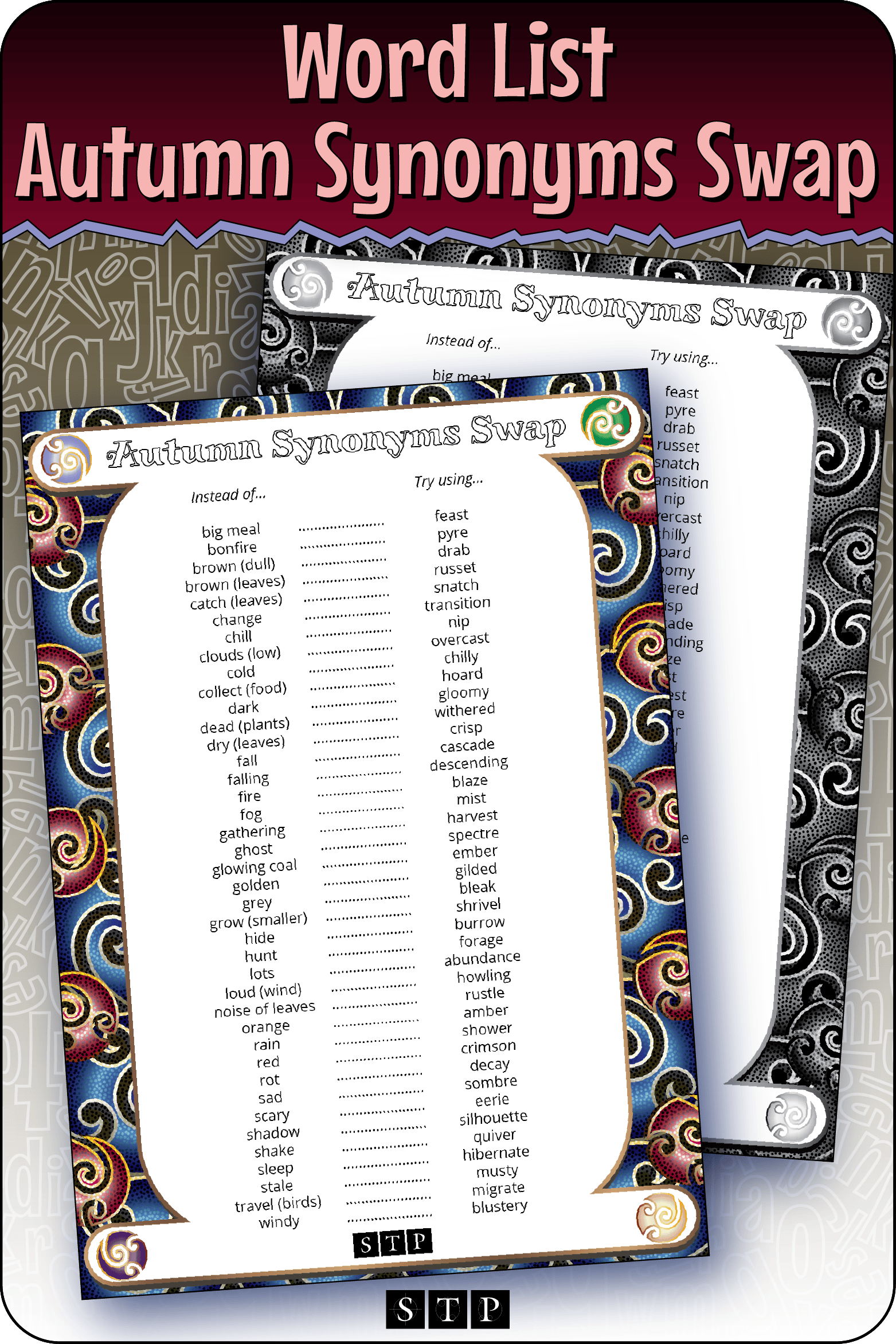
Encourage your child to find alternatives for their favourite words for summer with this set of 40 synonym swap pairs, upgrading nouns like ‘beach’ to ‘shore’ and verbs like ‘drink’ to ‘gulp’.
ABOUT THIS FREE RESOURCE
Designed to be used as a digital learning aid or as a poster or a printed word mat, this free PDF provides a swap-list of 40 pairs of summer-themed synonyms to boost students’ word choices when describing the temperature, physical sensations, and the natural world.
CONTENTS AT A GLANCE
- 40 summer synonym pairs in a clear ‘Instead of …/Try Using…’ format
- Clarifying context included for words with multiple meanings or uses
- Words and phrases listed alphabetically for easy reference
- Full-colour and greyscale printing available
SUITABLE FOR
- Vocabulary enhancement
- Narrative and descriptive writing tasks with a summer or seasonal theme
- Use in the classroom or at home
- Parents and teachers who want a distinctive, ready-to- use vocabulary reference
SUGGESTED AGE GROUPS
- Ages: 9-10, 10-11
- Years: Year 5 and Year 6
- Key Stages: Upper KS2
LEARN MORE
To learn more about this resource's learning objectives and outcomes, seasonality & age range, please see this resource's FAQs.
To learn more about the specific features of this resource and suggestions about how to use it, please see our handy 40 Synonym Pairs for Summer FAQs.
40 SYNONYM PAIRS FOR SUMMER - LEARNING OBJECTIVES, SEASONALITY, & AGE RANGE FAQs
WHAT ARE THE LEARNING OBJECTIVES & OUTCOMES OF THIS RESOURCE?
The main aim of this resource is to inspire children and students to experiment with new words (the ‘Try Using…’ list) in a familiar seasonal context.
By giving them a range of choices, the pressure of having to find or to think of an alternative word or phrase is removed. Instead, students can use the word or phrase listed and focus on how best to employ it. Take, for example, how two synonyms for the word ‘hot’ might be used in two distinct ways to describe the weather:
PAIR A
- Having grown up in Scotland, he was not prepared for the hot Egyptian summers.
- Having grown up in Scotland, he was not prepared for the blistering Egyptian summers.
PAIR B
- Having grown up in Scotland, he was not prepared for the hot Egyptian summers.
- Having grown up in Scotland, he was not prepared for the sweltering Egyptian summers.
In PAIR A, the word ‘blistering’ tells us that the climate is more than just hot; the heat is so extreme that it can cause blisters to the skin. Similarly, in PAIR B, the word ‘sweltering’ also tells us that the climate is more than just hot. In this case, though, the characteristic of the heat that is being highlighted is different to PAIR A. In PAIR B, ‘sweltering’ emphasises the fact that the heat results in excessive, uncomfortable sweating.
In addition to building their vocabulary, this resource helps younger writers develop their knowledge of more subtle differences in meanings and word connotations. This, in turn, leads to students writing more vividly and precisely. It also develops their comprehension and analytical skills.
IS THIS AN EVERGREEN OR SEASONAL RESOURCE?
This resource is clearly designed with summertime activities in mind, and as such will be useful in relation to a range of seasonal reading and writing tasks.
That said, you may also find this resource useful at other times of the year if your child or student is writing a story about summer holidays, or is reading a novel or poetry that includes summer themes, events, or imagery.
CAN YOU PROVIDE FURTHER GUIDANCE REGARDING AGE RANGE & SUITABILITY?
The years and ages listed above are intended as recommendations only; please feel free to use this resource in any educational context that suits your needs.
40 SYNONYM PAIRS FOR SUMMER - USING THIS RESOURCE FAQs
SOME OF THESE WORDS FEEL LIKE SIMPLE UPGRADES. OTHERS FEEL QUITE DIFFERENT. IS THIS RIGHT? AND WHY IS THAT?
Yes, this is correct. There are two types of swaps in this list: (a) straightforward upgrade swaps and (b) connotation shifts.
(A) Upgrade Swaps
With this type of swap, the word is being replaced by a synonym that is slightly more vivid or precise. For example,
- She gazed up at the cloudless blue sky, squinting at the sun.
- She gazed up at the cloudless azure sky, squinting at the sun.
- Jarvis complained that his throat was dry.
- Jarvis complained that his throat was parched.
(B) Connotation Shifts
With this type of swap, the word is being replaced by another that is similar in meaning, but which carries different connotations. For example,
- Under the shining sun, they made their way up the sand dune.
- Under the glaring sun, they made their way up the sand dune.
In the first sentence, the sun is ‘shining’, or is extremely bright, and there may even be a suggestion of a positive mood.
In the second sentence, the fact that the sun is ‘glaring’ suggests a combination of anger and forcefulness.
Obviously, there are significant differences in tone and emotional responses (and therefore connotations) between the two words (‘shining and ‘glaring’) and their sentences.
Knowing not just what words mean, but what they do and how they can alter sentences is key to improving writing and reading skills.
I AM A PARENT: DO YOU HAVE ANY OTHER USAGE SUGGESTIONS FOR ME?
This resource provides you with a pre-selected list of themed words and synonyms that you can go through with your child at your own pace, and in your own way. You may wish to go through the words in alphabetical order, or you may wish to select words that relate to other tasks you are engaged in.
Given its nature, this resource lends itself well to dictionary work and subsequent discussions about similarities and differences in meaning and usage.
As you and your child go through this list, you may wish to create two lists: one for upgrade swaps, and the other for connotation shifts.
If spring is characterised by a relatively quick rate of change, this slows down in summer for a lot of people. It is also the season during which you and your child are most likely to have the inclination and the time to go outside. Consequently, this list leans into sensory vocabulary:
- sound (drone, raucous)
- touch (stifling, parched, brittle)
- taste (succulent, devour)
- sight (shimmer, glare, azure, dazzling__)
- smell (scorch, aroma)
You may find, therefore, that, as with the spring list, this selection of paired words is of especial use as a vocabulary primer before you go out, a checklist that you consult while on your walk, or, as a useful starting point for a post-excursion writing task or discussion.
An additional activity you and your child may enjoy is trying to identify as many objects or items as possible that can be linked to a single word in the ‘Try Using….’ part of the list.
ARE THESE WORDS SUITABLE FOR YEAR 6 SATs ENGLISH PREPARATION?
Yes. Questions involving synonyms (whether in passages, true or false, or matching questions) are routinely used in the Year 6 English Paper 2: Grammar, Punctuation & Spelling.
Focusing on synonyms and building your child’s synonym strongbox, therefore, is worthwhile throughout Year 6.
ARE THESE WORDS SUITABLE FOR 11+ PREPARATION?
Yes. This set of words is a useful addition to 11+ preparation given its focus on words with different connotations since these are often pivotal to answering odd ones out questions.
More generally, the more sophisticated vocabulary is useful for both reading comprehension and writing tasks.
HOW DO I USE THIS RESOURCE AS A PRINTED RESOURCE?
You may wish to print the list and keep it on the desk as a word mat during writing sessions as a quick reference tool so that your child can pick an appropriate synonym when needed.
However, please make sure your child is aware that not all swaps are interchangeable and that some words have connotations that may not be right in every context.
The list works equally well as a wall display in a classroom or home study space.
In addition, you may find it helpful to keep a copy of this list in a vocabulary folder (if you have one).
HOW DO I USE THIS RESOURCE AS A DIGITAL LEARNING AID?
There are several ways for you to use this PDF on a screen.
If your child or student works on a computer, laptop, or tablet, they can keep the PDF open on one half of the screen as a permanent, digital word bank they can glance at when they need inspiration.
Save the PDF to a tablet or an iPad. Using any basic PDF reader, your child or student can highlight synonyms they want to draw on in their work or cross the words off as they use them.
If you are a teacher and you want to use this resource in your classroom, you might consider projecting this PDF onto an interactive whiteboard during a creative writing lesson to use for whole-class brainstorming or group work.
Note: Given the vibrant nature of the full-colour version of this resource, it works particularly well in its digital format.