Home > Free Resources > Worksheets & Activities > Festive Season Synonyms (Y5 & Y6)
KS2 Festive Season-Themed Synonyms Worksheets with Answers – Free Printable PDF for Years 5–6
- RRP:
- FREE
- Format:
- Printable PDF
- Pages:
- 11
- UK English
No email required.
Overview
Help broaden your child's knowledge of festive nouns with these free printable synonym-sorting worksheets.
ABOUT THIS FREE RESOURCE
This printable PDF provides children with targeted synonym-matching practice. Children are given 36 nouns to sort into three groups: synonyms of happiness, charity, or peace.
The resource includes two differentiated versions: Version 1 suggests a strategy to help students progress; for a greater challenge, Version 2 provides the core task only. The resource contains suggested answers and marking guidelines.
Also included are a glossary and an alphabetical word list.
Quick Notes for Parents & Teachers outline the learning objectives, explain the two versions, and map the sections of the resource.
The resource includes two printing options for the exercises: colour or ink-friendly greyscale.
CONTENTS AT A GLANCE
- 36 nouns to sort into one of three groups (synonyms for HAPPINESS, CHARITY or PEACE)
- Two versions: with hints (suggests sorting strategies) and no hints (provides instructions only)
- Glossary of target words
- Word List in alphabetical order
- Full suggested answers
- Marking guidelines
- Quick Notes for Parents & Teachers
- Colour-accented and ink-friendly greyscale printing options available
- Links to further free resources
- A4 printable PDF
SUITABLE FOR
- Vocabulary, synonym & antonym reinforcement
- Classwork, homework, tutoring, or home learning
- Quick, themed sessions to support & extend vocabulary knowledge
- Parents and teachers who want event-specific, self-contained practice materials
SUGGESTED AGE GROUPS
- Ages: 9-10, 10-11, 11-12
- Years: Year 5, Year 6, & Year 7
- Key Stages: Upper KS2 & Early KS3
LEARN MORE
To learn more about this resource's differentiation, learning objectives & outcomes, seasonality & age range, please see this resource's FAQs.
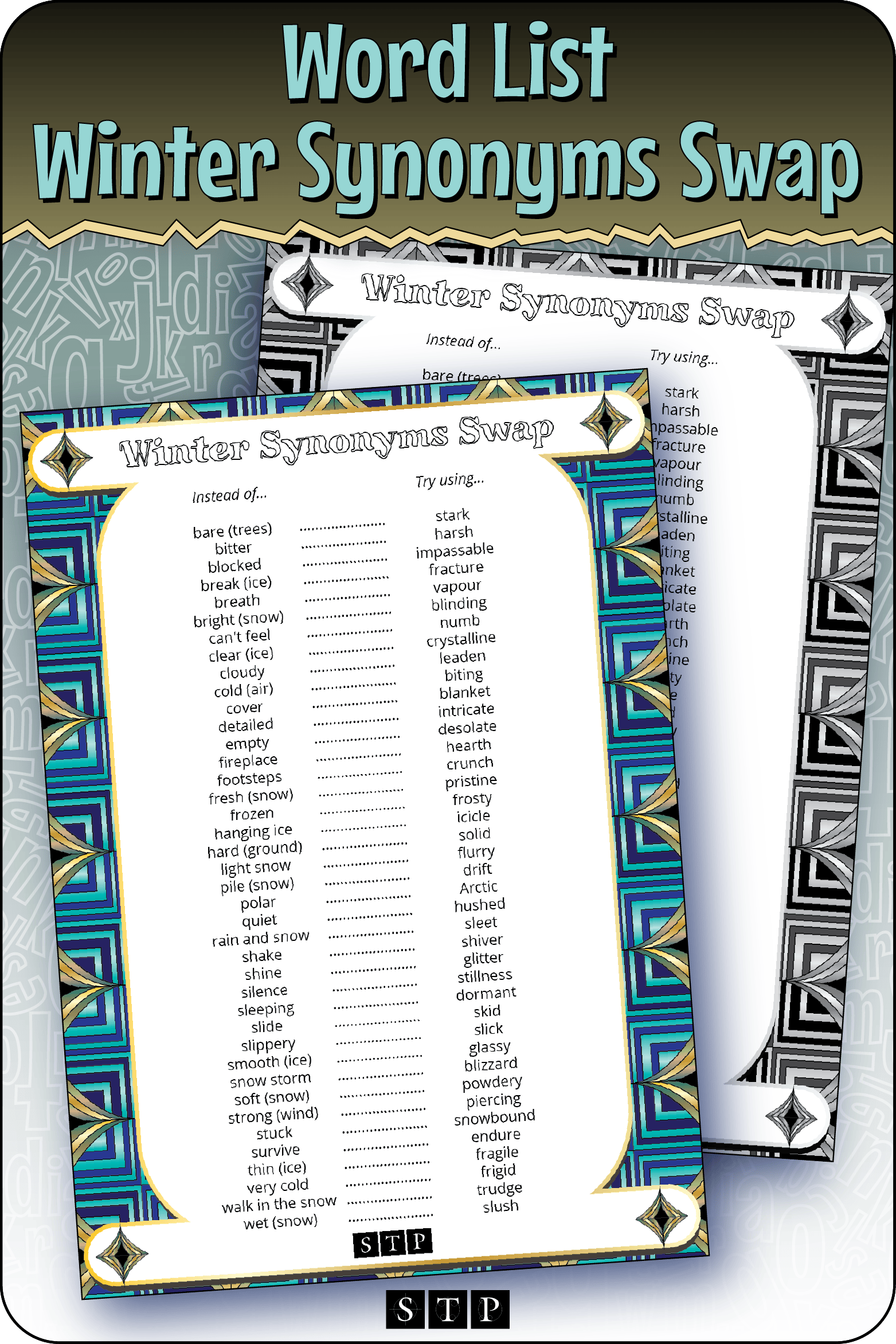
To learn more about synonyms for the winter festive season along with suggestions on how to incorporate them into your activities with your children or students, please see our handy Festive Synonyms FAQs.
DIFFERENTIATION, LEARNING OBJECTIVES, SEASONALITY, & AGE RANGE FAQs
DIFFERENTIATION
What is a Differentiated Resource?
A differentiated resource is one that provides the same exercise in two distinct versions. Each version has its own format and separate instructions.
Why Differentiate?
The material is differentiated to accommodate children and students with a range of abilities and strengths. The differentiation also means that the exercise can be used more than once - with Version 2 providing an extra (or subsequent) challenge.
How is this Resource Differentiated?
Version 1 provides children and students with guided practice. They are given the precise number of target nouns that can be placed in each group of synonyms along with a suggested elimination strategy to help children and students progress through the activity.
Version 2 gives children and students the opportunity to practise independently. They are told which categories the target nouns can be divided into, but not how many words can be placed in each category.
LEARNING OBJECTIVES & OUTCOMES
These exercises help establish how well children and students know the meanings of a predefined set of nouns. The exercises also help show how aware children and students are of the potential synonymous relationships between the predefined nouns.
Focusing on this predetermined set of nouns helps reinforce those meanings and synonyms that the children and students already know while also potentially helping to extend their knowledge to include unfamiliar words.
SEASONALITY
You will most likely employ this resource in the late autumn / early winter during the run-up to Christmas. However, you can also use it at any point in the year - especially if your children or students are looking at materials connected to the various celebrations in November and December or engaged in creative writing projects.
AGE RANGE & SUITABILITY
Kindly note that the years and ages listed above are intended as recommendations only. Feel free to use this resource in any educational context that is appropriate to your needs.
SYNONYMS FOR THE FESTIVE SEASON - FAQs
Seasonal events are a great chance to encourage your child to be more creative with language and word choices, and Christmas is a perfect opportunity for this.
One key way to help younger learners improve is by building their knowledge of synonyms.
The more synonyms they know, the more precise their speech and writing will be. Furthermore, synonyms will help make your child's descriptions more varied and engaging.
Tip: You can find a general guide to synonyms here.
* * * * *
What are Synonyms?
In brief, synonyms are words with similar meanings.
It is important to note that while they don't always mean exactly the same thing, they are close in meaning. This means that synonyms can often be swapped into or out of a a sentence without changing the overall message too much.
Examples of Synonyms with a Christmas Twist:
- Happy → Merry, Cheerful, Jolly
- The guests were all happy at the Christmas party.
- The guests were all merry at the Christmas party.
- The guests were all cheerful at the Christmas party.
- The guests were all jolly at the Christmas party.
- Gift → Present,Contribution, Donation
- They were thrilled with their generous gift.
- They were thrilled with their generous present.
- They were thrilled with their generous contribution.
- They were thrilled with their generous present.
- Sparkle → Glimmer, Glitter, Twinkle
- She loved how the ornaments sparkled in the candlelight.
- She loved how the ornaments glimmered in the candlelight.
- She loved how the ornaments glittered in the candlelight.
- She loved how the ornaments twinkled in the candlelight.
- Cold → Chilly, Icy, Freezing
- The bitter wind blowing in from the north was cold.
- The bitter wind blowing in from the north was chilly.
- The bitter wind blowing in from the north was icy.
- The bitter wind blowing in from the north was freezing.
* * * * *
Why are Synonyms Important?
Synonyms are powerful tools for young writers and readers for several key reasons:
Improving Writing Quality:
- Avoid Repetition: Synonyms help stop writing from sounding dull and repetitive. Rather than saying, "The happy children sang happy carols at the happy gathering," your child could say, "The joyful children sang their merry carols at the festive gathering."
- Add Variety and Interest: Synonyms make writing more vivid and engaging, holding the reader's attention with rich descriptions.
- Express Nuance: Sometimes, synonyms can express slightly different shades of meaning, allowing your child to be more precise. For example, "happy" differs from "ecstatic" (a much more intense joy) or "peaceful" (a calm contentment).
Aiding Comprehension:
When reading Christmas stories or carol lyrics, knowing synonyms can help your child understand unfamiliar words by linking them to words that they already know.
* * * * *
Where Do We Find Synonyms and How Do We Learn Them?
The process of learning synonyms does not stop, but there are some practical approaches that you might find useful:
1. Exploring Words in a Thesaurus:
This is the most direct tool. A thesaurus (whether in print or online) is a dictionary of synonyms. Encourage your child to look up words they often use, like "decorate" or "sing", and find alternatives.
2. Read Widely:
The more your child reads, the more unfamiliar words and their synonyms they will inevitably encounter. Encourage them to notice how different authors use alternative words to describe similar things.
3. Vocabulary Games:
Word games have long been recognised as a highly effective way for children and students to strengthen their vocabularies whilst having fun.
- Christmas Word Wall
Create a word wall at home with a main Christmas word (e.g., "joy") and its synonyms.
- Santa's Synonyms Stocking
Write Christmas words on flashcards and put them in a stocking or pillowcase. Then, have your child pull out a card and say a synonym for each word.
* * * * *
Are There Tricky Synonyms? What Types of Words Can Be Synonyms?
Yes, some synonyms are certainly tricky. While many common synonyms are easy to swap (like "bright" and "shining"), some words have very subtle differences in meaning, tone, or in how they are used.
- Subtle Differences: For example, "carols" and "songs" are synonyms, but "carols" carry a direct, explicit traditional Christmas connotation. Choosing the right synonym depends on the exact idea you want to convey.
- Example:
- The children sang the carols beautifully.
- The children sang the songs beautifully.
- While both sentences are grammatically correct, the use of "carols" in the first tells us we are absolutely talking about a Christmas-related event. The use of "songs", on the other hand, does not show what type of songs these were, or when they were sung.
- Context is Key: A synonym that works in one Christmas sentence might not work in another.
- Example:
- The fairy lights on the tree flashed.
- The fairy lights on the tree flared.
- In this context, we expect the fairy lights to change, but we expect them to do so gently, so although flared is grammatically correct, it is contextually odd and not the best word to use here.
* * * * *
What Types of Words Can Be Synonyms?
Synonyms exist for many types of words, not just descriptive ones:
- Nouns (naming words):
- gift = present, offering, donation
- Verbs (doing words):
- decorate = adorn, embellish, trim
- Adjectives (describing words):
- festive = celebratory, jubilant, merry
- Adverbs (describing actions):
- quietly = softly, gently, silently
* * * * *
Are there Rules for Synonyms?
Unlike antonyms, there are no guidelines for constructing synonyms. Synonyms just exist as part of language.
Like antonyms, though, when using synonyms, the one thing your child should always do is think about what it is exactly that they wish to express to ensure that they choose the best word for the context.
* * * * *
RELATED WORKSHEETS & QUICK GUIDES
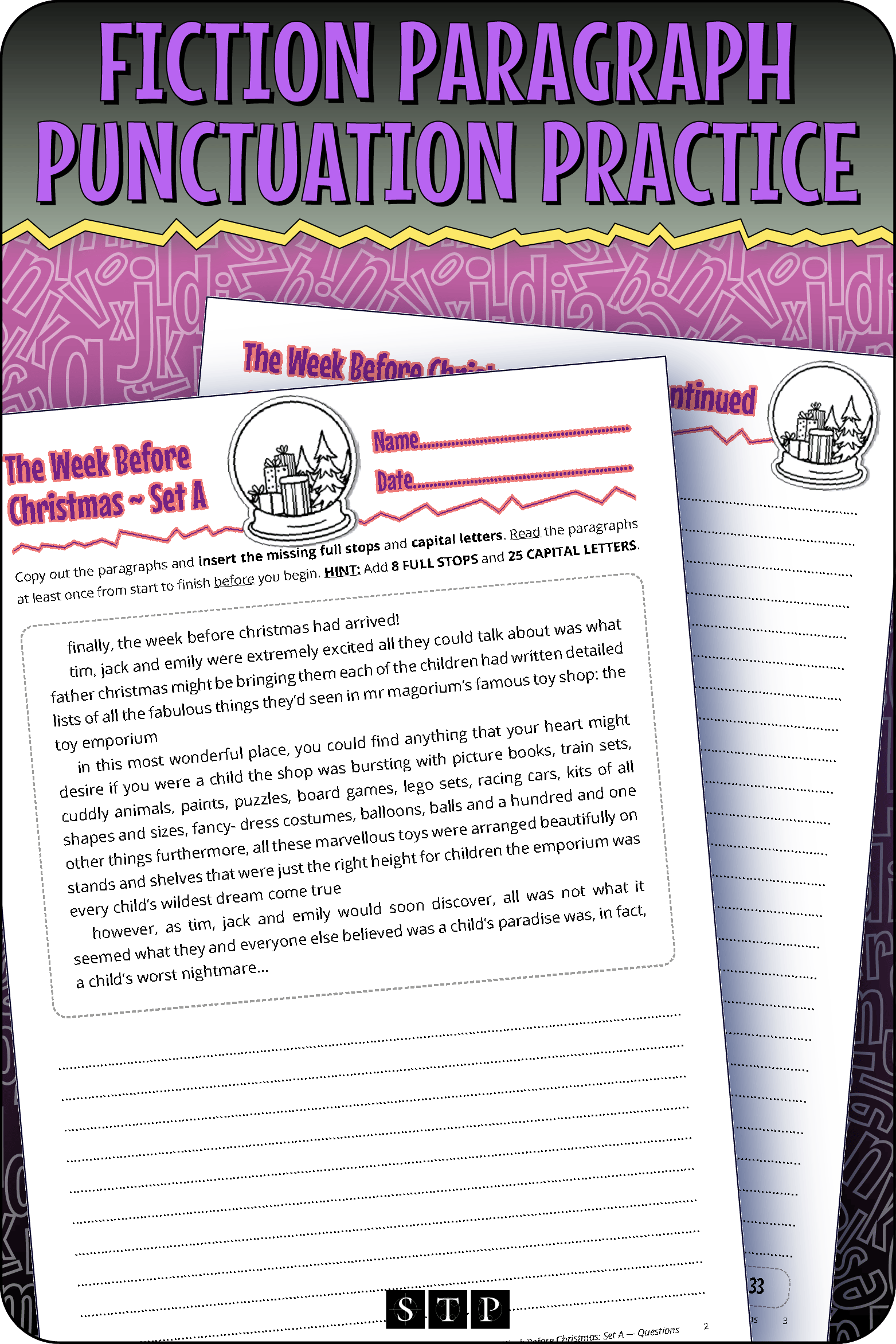
Christmas Paragraph Punctuation Worksheets & Quick Guide for Parents