Home > Free Resources > Quick Guides for Parents > Synonyms (KS2 & KS3)
UNDERSTANDING SYNONYMS: A QUICK GUIDE FOR PARENTS (KS2 & KS3)
What are Synonyms?
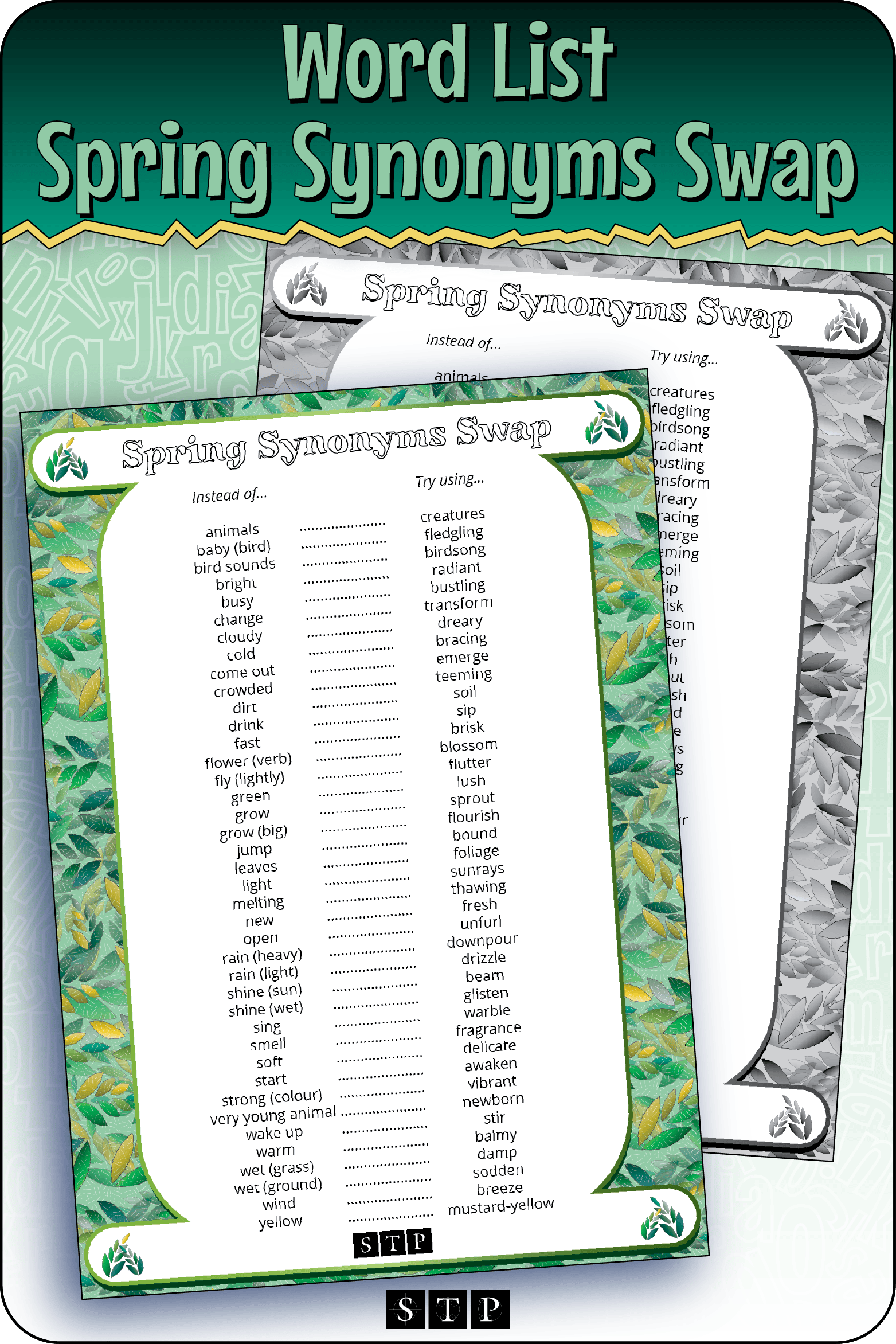
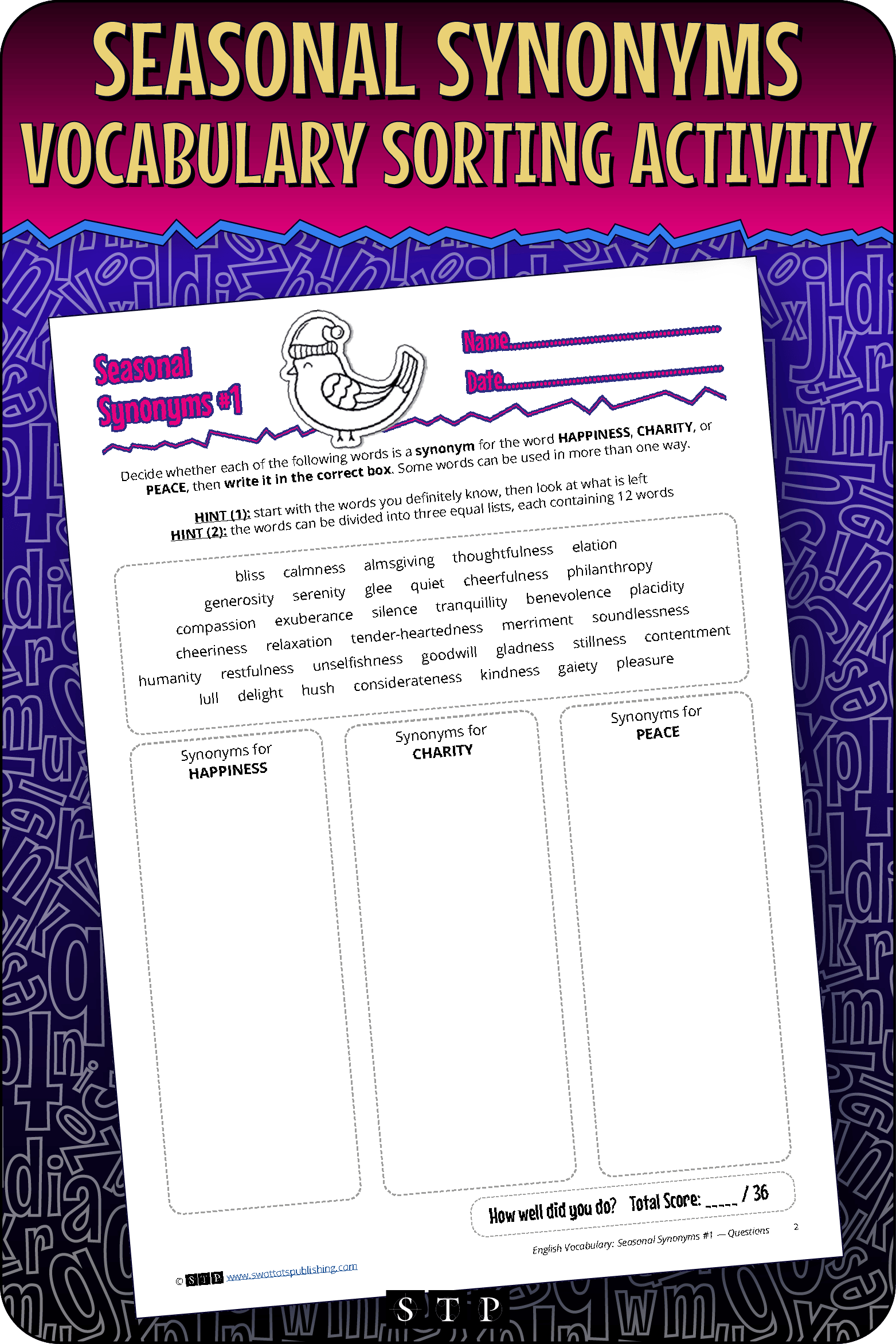
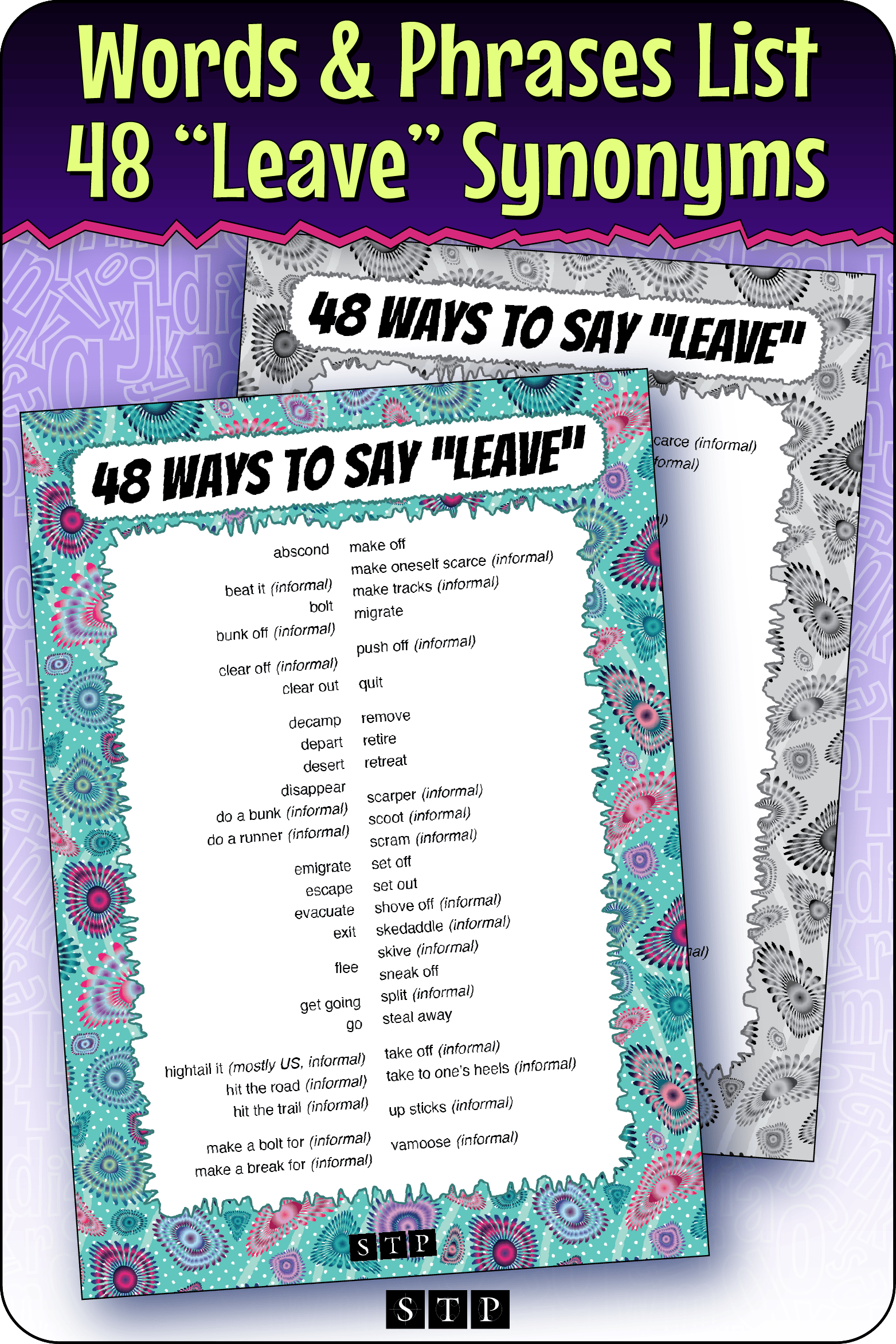
In a nutshell, synonyms are words with similar meanings.
It is important to note that while they don't always mean exactly the same thing, they are close in meaning. This means that synonyms can often be swapped into a sentence without changing the overall message too much.
- Big→Large, Huge, Enormous
- Surprisingly, the big giant was friendly.
- Surprisingly, the large giant was friendly.
- Surprisingly, the huge giant was friendly.
- Surprisingly, the enormous giant was friendly.
- Happy→Joyful, Cheerful, Carefree
- The sound of happy children filled the park.
- The sound of joyful children filled the park.
- The sound of cheerful children filled the park.
- The sound of carefree children filled the park.
- Excellent→Noteworthy, Outstanding, Remarkable
- Her latest book is excellent.
- Her latest book is noteworthy.
- Her latest book is outstanding.
- Her latest book is remarkable.
* * * * *
Why Are Synonyms Important?
Synonyms are very useful tools for young writers and readers for several key reasons:
Improving Writing:
- Avoid Repetition: Synonyms help stop writing from sounding repetitive. Instead of saying, "The big dog ran to the big living room and barked at the big cat," your child could say, "The big dog ran to the large living room and barked at the oversized cat."
- Add Variety and Interest: Synonyms make writing more engaging and enjoyable to read. They add a touch of sophistication and flair.
- Express Nuance and Precision: Sometimes, synonyms can express slightly different shades of meaning, allowing your child to be more precise. For example, "walk" differs from "stroll" (a relaxed walk) or "stride" (a confident walk).
Aiding Comprehension:
When reading, knowing synonyms can help your child understand unfamiliar words by linking them to words they already know.
* * * * *
Where Do We Find Synonyms and How Do We Learn Them?
Learning synonyms is an ongoing journey, but there are some strategies that you might find helpful:
1. Exploring Words in a Thesaurus:
This is the most direct tool. A thesaurus (whether in print or online) is a dictionary of synonyms. Encourage your child to look up words they often use and find alternatives.
2. Read Widely:
The more your child reads, the more new words and their synonyms they will encounter naturally. Help them to notice how different authors use various words to describe similar things.
3. Vocabulary Games:
Word games have long been recognised as a highly effective way for children and students to strengthen their vocabularies whilst having fun.
- Word Walls
Create a word wall at home with a main word and its synonyms.
- Flashcards
Write a word on one side and several synonyms on the other.
- Same or Different?
Say two words and have your child tell you if they are synonyms or not.
4. Discuss Word Families:
When your child learns a new word, ask them what other words mean something similar. For example, if they learn "ancient," ask if "old" or "historic" are similar.
* * * * *
Are There Tricky Synonyms?
Yes. Some synonyms are certainly tricky. While many common synonyms are easy to swap (like "big" and "large"), some words have very subtle differences in meaning, tone, or in how they are used.
- Subtle Differences: For example, "happy" and "ecstatic" are synonyms, but "ecstatic" suggests a much more intense happiness. In these cases, the meaning (or context) of the sentence as a whole will help you choose the right synonym.
- Example (1):
- The fans were happy their team won.
- The fans were ecstatic their team won.
- In this context, we expect the fans to have very strong emotions, so while the use of happy is both grammatically and contextually correct, ecstatic is a better contextual fit.
- Context is Key: A synonym that works in one sentence might not work in another.
- Example (2):
- "I would be happy to help," he said.
- "I would be ecstatic to help," he said.
- In this context, we expect the person speaking to have a sincere, but moderate, willingness to help, so although ecstatic is grammatically correct, it is contextually odd and thus not the best word to use in this situation.
* * * * *
What Types of Words Can Be Synonyms?
Synonyms exist for many kinds of words, not just descriptive ones:
- Nouns (naming words):
- house = home, dwelling, residence
- Verbs (doing words):
- run = sprint, jog, dash
- Adjectives (describing words):
- small = tiny, little, miniature
- Adverbs (describing actions):
- quickly = rapidly, swiftly, speedily
- Prepositions (connecting words):
- under = beneath, below
* * * * *
Are There Rules for Synonyms?
There aren't fixed rules for creating synonyms in the way there are some rules for creating antonyms (words with opposite meanings). Instead, synonyms just exist as part of the language.
Like antonyms, though, when using synonyms, the one thing your child should always do is think about what it is exactly that they wish to express to ensure that they choose the best word for the context.
* * * * *
RELATED WORKSHEETS & QUICK GUIDES
Halloween Synonyms Worksheets Set 01 & Quick Guide for Parents